
Last updated September 10, 2026
Level 1 sweep and inspection to the NFPA 211 annual standard - flue, crown, cap, and flashing checked and photographed
Chimney sweep logs do not sweep chimneys. They loosen some creosote - which then falls where a brush and vacuum still have to collect it.
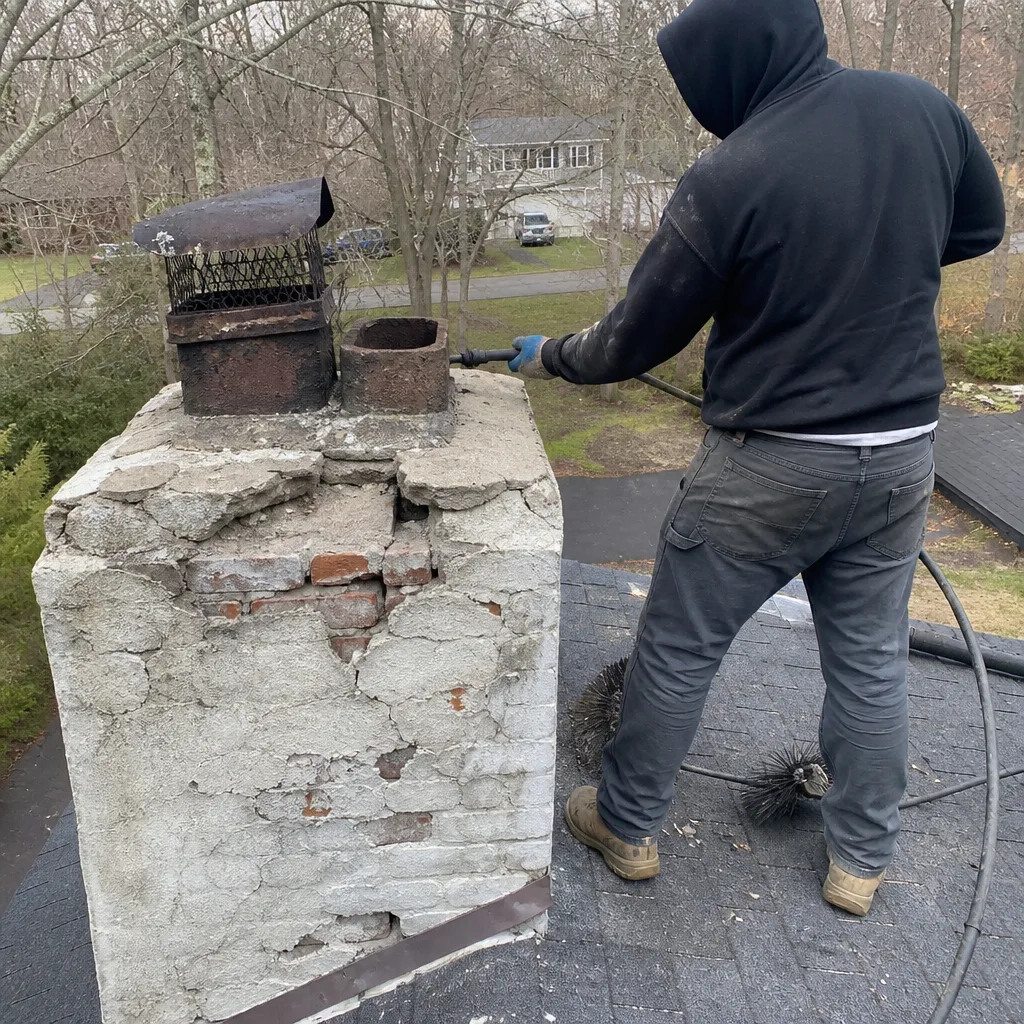 Before
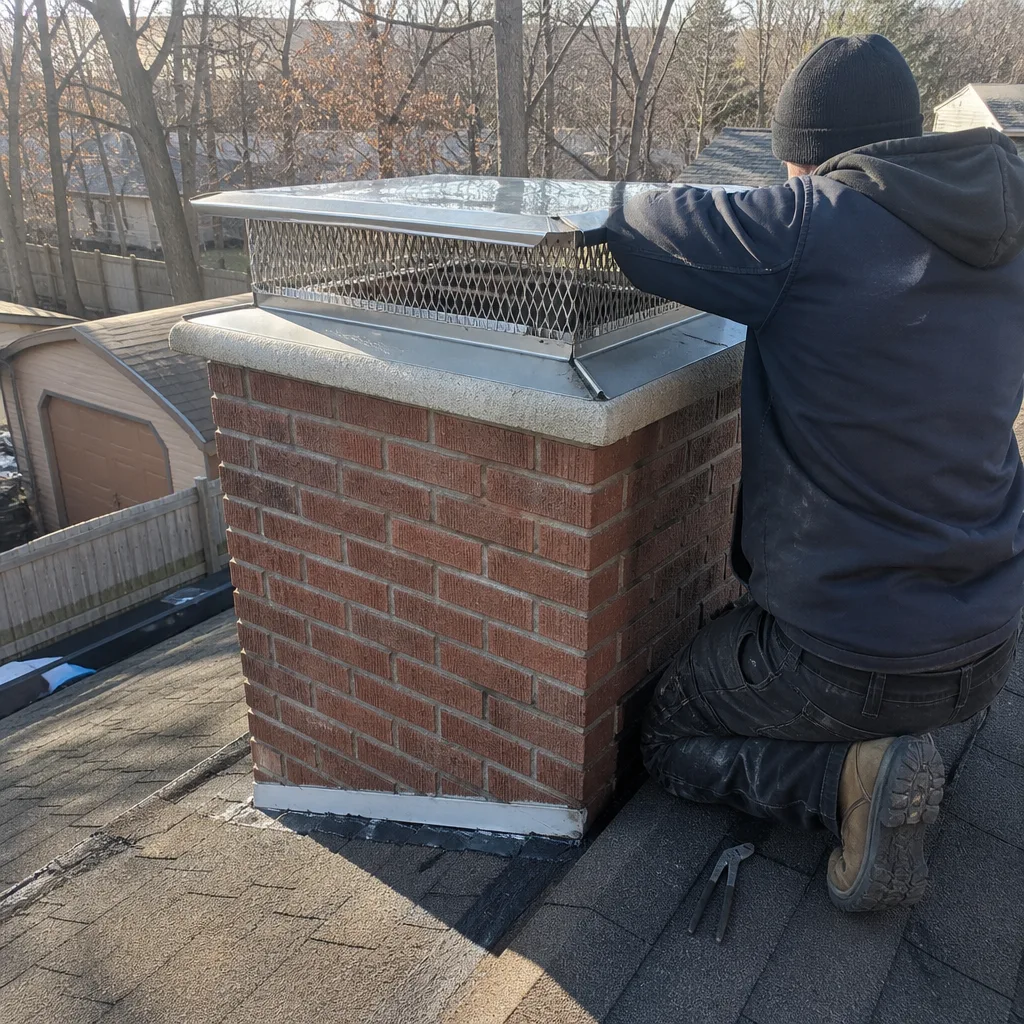 After
After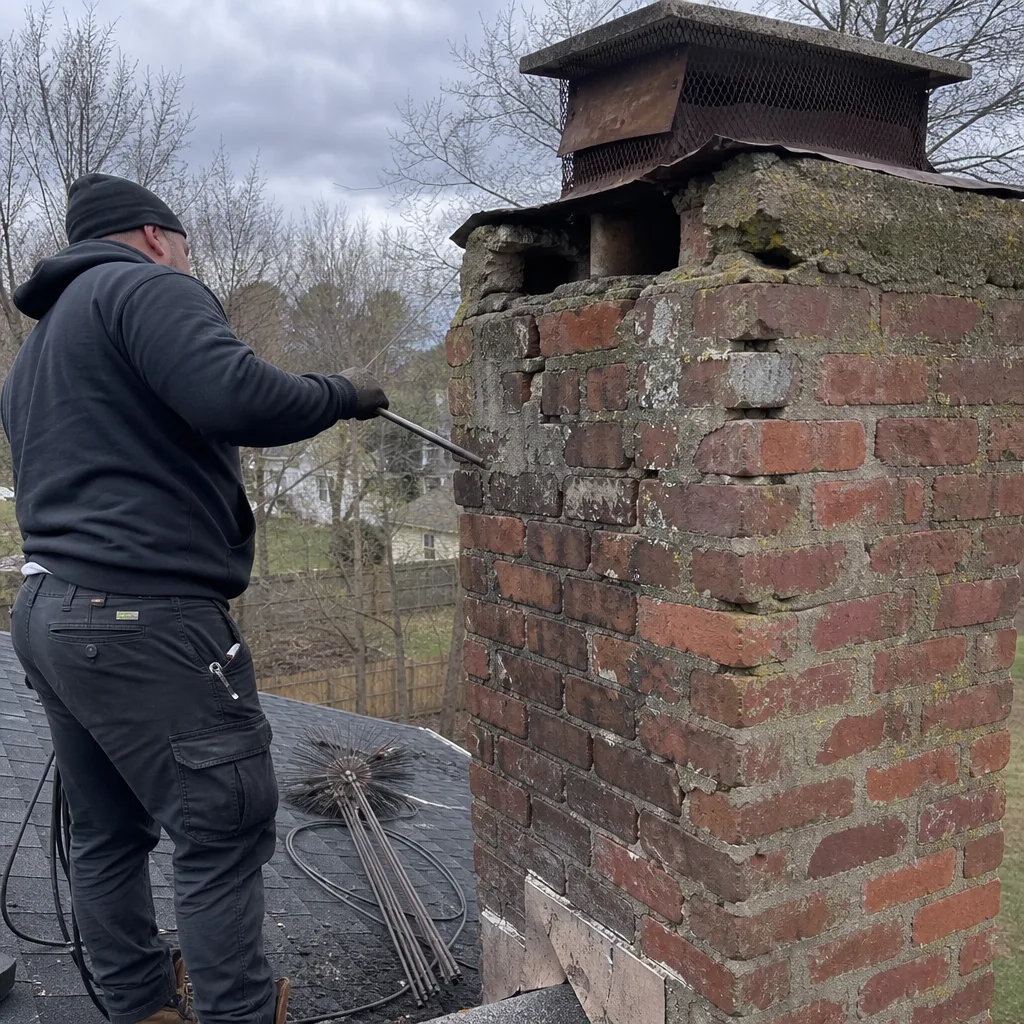 Before
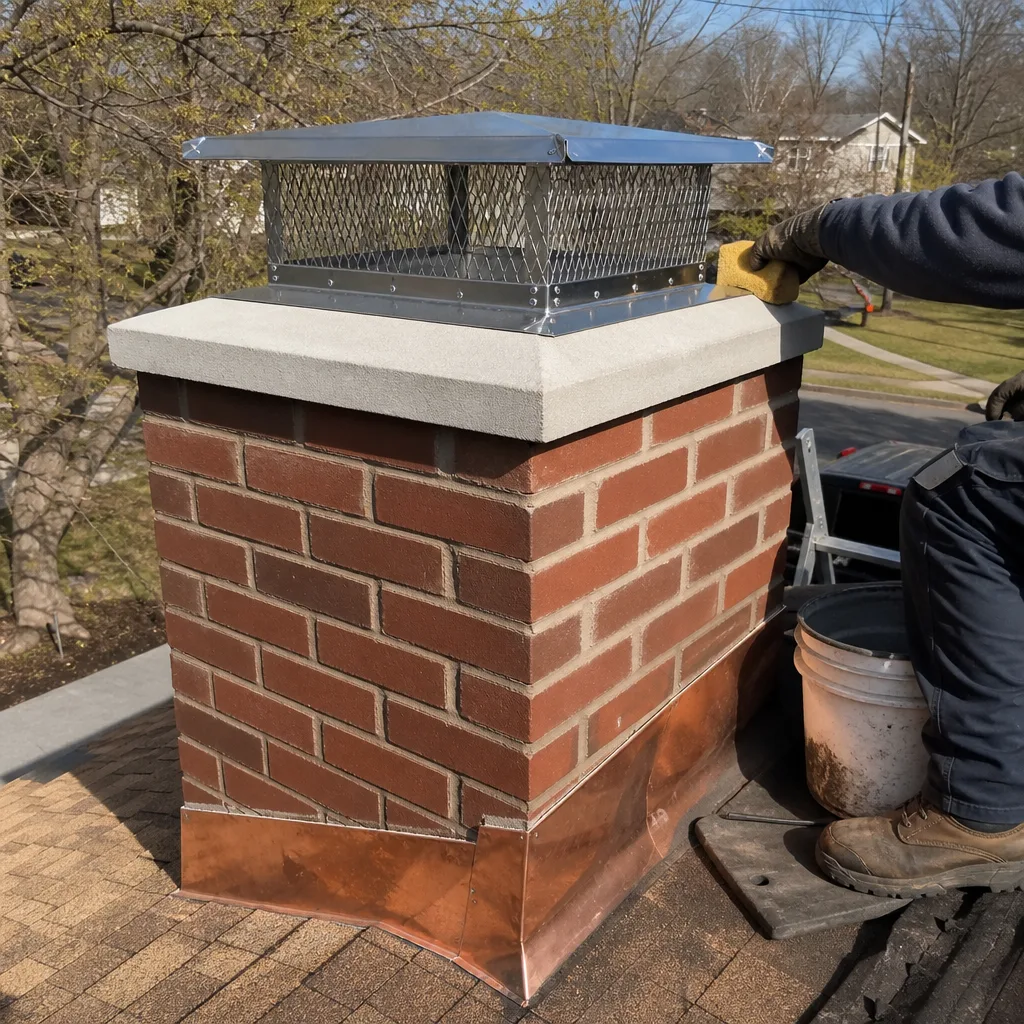 After
After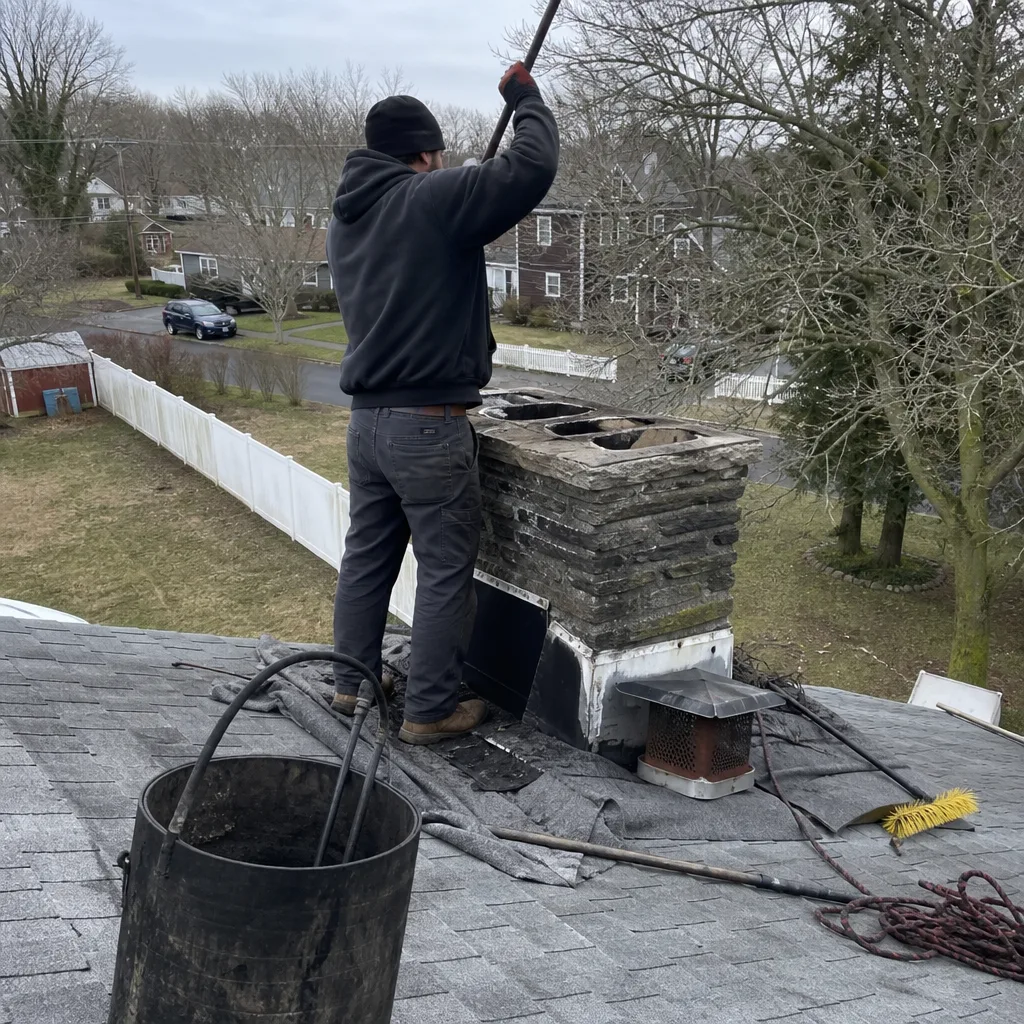 Before
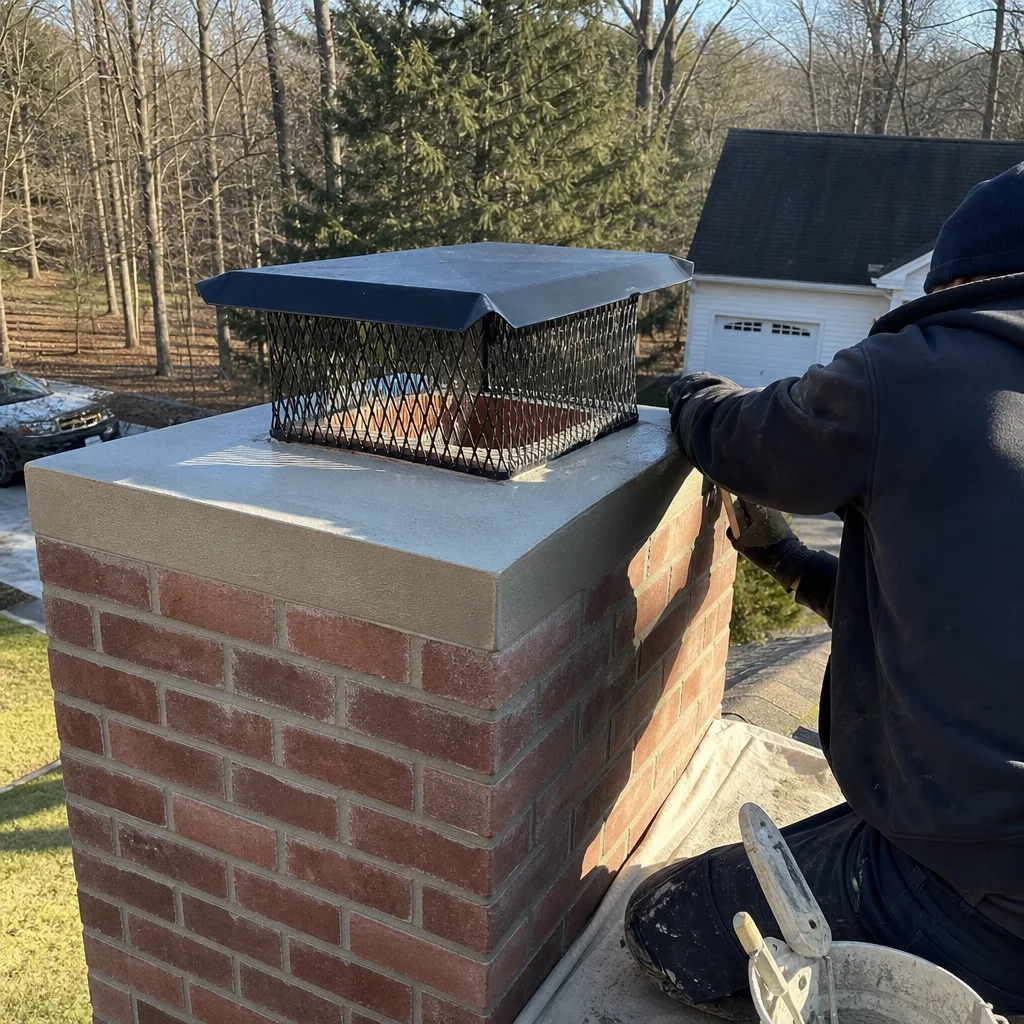 After
AfterSeasonal Chimney Cleaning Care for Smithtown: Year-Round Homeowner’s Guide
A chimney in Smithtown weathers conditions that a chimney 40 miles inland never faces. Salt-laden air off Long Island Sound accelerates mortar erosion, and the area averages 14 freeze-thaw cycles per heating season - each one working on any crack the previous summer’s moisture opened. The generic “clean it once a year” advice misses the actual seasonal rhythm this geography demands. In this guide, you’ll learn how Smithtown’s unique microclimate shapes what your chimney needs in spring, summer, fall, and winter - and how to time each task so you’re not scrambling when the first cold snap hits.
Quick Answer
Smithtown chimneys need a four-season maintenance rhythm: a post-winter inspection in April to catch freeze-thaw damage before summer humidity seals moisture into cracks; waterproofing of caps and crowns in June or July before hurricane season; a full cleaning and pre-burning-season inspection in September or early October before demand peaks; and mid-season monitoring from January through March for draft problems and creosote buildup. Most Smithtown homeowners who follow this schedule avoid emergency calls in December, when local sweeps are typically booked two to three weeks out. For a complete task-by-task breakdown, see our Chimney Cleaning & Sweep Maintenance Checklist for Smithtown Homeowners.
Table of Contents
- Spring: The Post-Heating-Season Inspection That Saves Your Chimney
- Summer: Waterproofing Before the Humidity and Storms Hit
- Fall: The Pre-Burning-Season Checklist for Dormant Fireplaces
- Winter: Mid-Season Monitoring and Warning Signs
- How to Time Your Appointments Around Smithtown’s Demand Peaks
- Common Mistakes to Avoid
- When to Call a Professional
- Frequently Asked Questions
Spring: The Post-Heating-Season Inspection That Saves Your Chimney
April is the most overlooked month in chimney maintenance. After four to five months of steady use, your flue has accumulated creosote, your masonry has absorbed combustion moisture, and your chimney’s exterior has endured repeated freeze-thaw cycling. In Smithtown specifically, winter storms tracking up Long Island Sound drive wind-driven rain against the north and east faces of chimneys. By March, small cracks have opened. If you wait until fall to inspect, summer humidity will have worked into those cracks, and the next freeze cycle will widen them further.
We’ve inspected chimneys in the Smithtown area for over 42 years. The pattern is consistent: the homeowners who call us in April save an average of 40% compared to those who discover the same damage in October and need rush repairs before burning season.
What to Look For After a Smithtown Winter
- Spalling brick faces on the north and east sides. These are the faces that take the brunt of Sound-driven storms. Tap suspected bricks lightly with a hammer handle. A hollow sound means the face has separated from the body of the brick.
- White efflorescence on the exterior. This powdery residue means moisture is moving through the masonry, dissolving salts, and depositing them on the surface. In Smithtown’s salt-air environment, efflorescence accelerates.
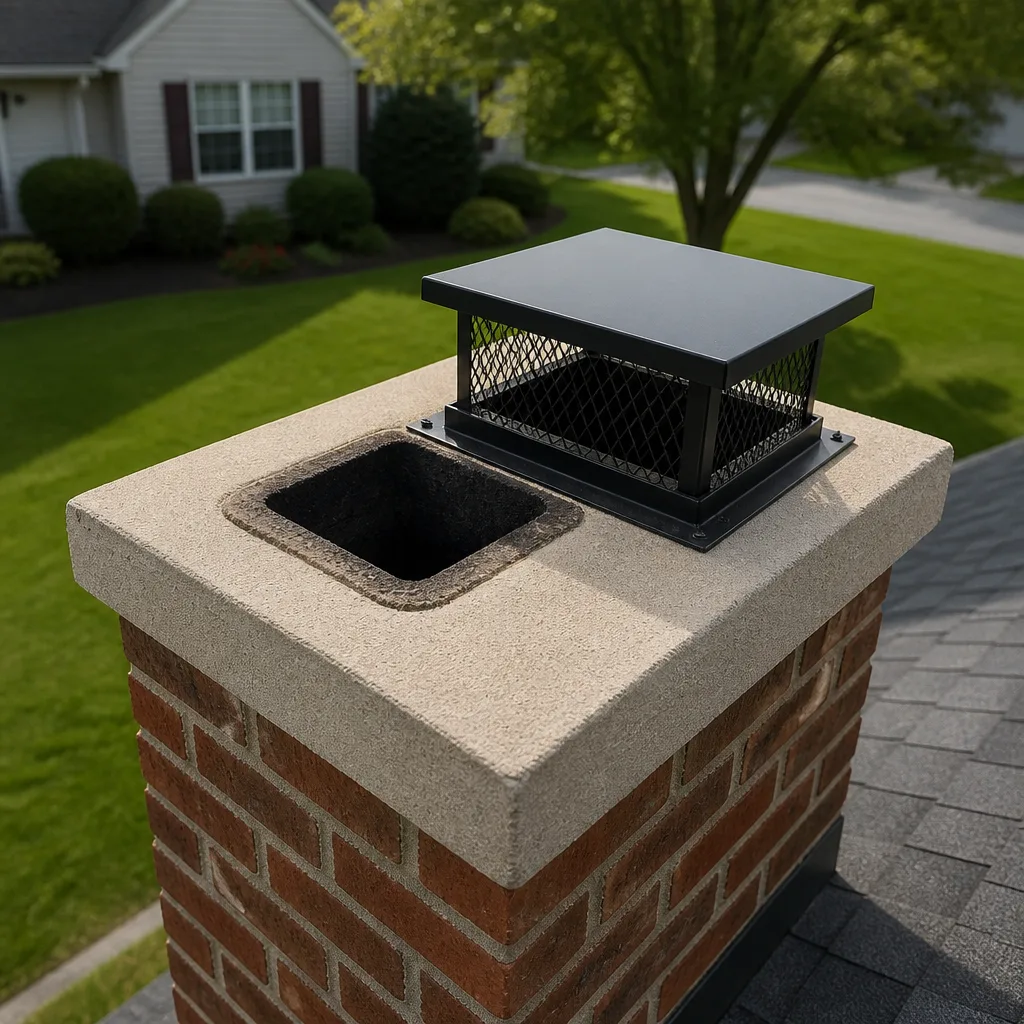
- Deteriorated mortar joints at the crown line. The crown is your chimney’s umbrella. If water is getting behind it, the freeze-thaw damage moves downward through the structure.
- Rust stains on the firebox or damper. These indicate water entry from above, often through a cracked crown or failed flashing.
- Creosote glazing in the flue. Spring is the ideal time to remove it before summer heat and humidity bake it into a harder, more flammable layer.
The key advantage of a spring inspection is time. If we find crown damage, liner deterioration, or masonry that needs repointing, you have six months to schedule repairs at normal rates. In October, every reputable sweep in Suffolk County is booked solid, and prices reflect that scarcity.
Our Level-2 camera inspections in spring include photos you can see and a plain-English verdict. We document what can wait, what should be done before fall, and what poses a safety risk if the chimney is used again without repair. No jargon, no pressure - just the facts, in writing.
Summer: Waterproofing Before the Humidity and Storms Hit
Smithtown’s summer climate is harder on chimneys than most homeowners realize. July and August bring sustained humidity above 75%, and tropical systems or their remnants deliver concentrated rainfall. A chimney with any spring damage absorbs that moisture deeply. When the first freeze arrives - typically by late November - the expansion of that trapped water does structural damage that could have been prevented.
Summer is also when salt air from Long Island Sound is most active. The combination of moisture and airborne chlorides accelerates corrosion of metal components and chemical breakdown of some waterproofing products. We’ve learned through decades of work in Smithtown chimney repair that not all sealants survive this environment.
Which Sealants Hold Up in Smithtown’s Salt Air
| Product Type | Performance in Salt-Air Environments | Typical Lifespan in Smithtown |
|---|---|---|
| Silane/siloxane penetrating sealers | Excellent - breathable, repels water without trapping vapor | 7-10 years |
| Acrylic film-forming coatings | Poor - trap moisture, peel within 1-2 seasons | 1-2 years |
| Elastomeric crown coatings | Good with proper prep - must be paired with crack repair | 5-7 years |
| Water-based “waterproofing” paints | Unsuitable - cosmetic only, fail rapidly | Less than 1 year |
We use professional-grade materials from Olympia Chimney, Famco, and Copperfield for cap and crown work. These are not builder-grade substitutes. A properly sealed crown with a silane-based treatment and a stainless steel or copper cap from a trusted manufacturer prevents the moisture entry that destroys chimneys from the top down.
One detail specific to Smithtown: homes in neighborhoods near the Nissequogue River or the harbor areas experience higher groundwater and more persistent humidity. Chimneys in these locations benefit from more frequent exterior inspections and earlier reapplication of penetrating sealers.
What Summer Waterproofing Includes
- Pressure-washing of exterior masonry to remove biological growth and salt residue
- Inspection and repair of crown cracks with elastomeric compound
- Application of silane/siloxane penetrating sealer to vertical masonry surfaces
- Replacement or securing of chimney cap with corrosion-resistant fasteners
- Flashing inspection and resealing where separation is detected
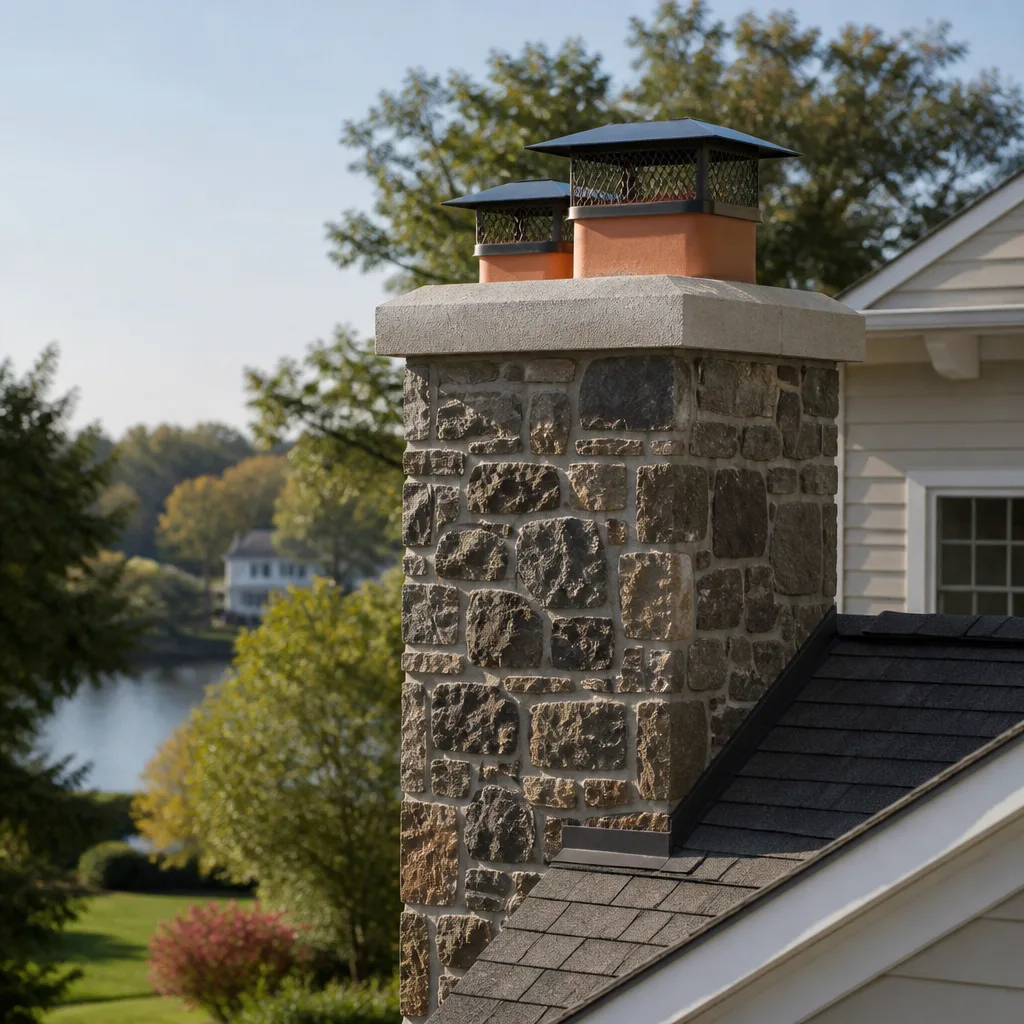
Summer is also the season to address animal intrusion. Squirrels, raccoons, and chimney swifts are active. A cap with proper mesh screening installed now prevents a blocked flue or nesting debris fire in fall.
Fall: The Pre-Burning-Season Checklist for Dormant Fireplaces
September and early October are your last window before demand spikes. In Smithtown, we see a predictable pattern: the first night below 50 degrees triggers hundreds of fireplace lightings, and within a week our phones ring steadily with emergency calls from homeowners who smell smoke in the house, hear animals in the flue, or discover their damper won’t open.
The problem with chimneys that sat dormant all summer is that dormancy conceals problems. Moisture that entered in spring has had months to degrade mortar, rust metal components, and compact debris into blockages. A chimney that drew perfectly last March may fail completely this October.
The October Pre-Season Checklist
- Verify the damper opens fully and seals when closed. A damper that sticks or fails to seat wastes heat and can admit downdrafts. We test this with a smoke pencil to confirm proper draw.
- Inspect for animal nesting. Chimney swifts are protected; their nests cannot be removed during active nesting. But nests from prior seasons, squirrel debris, or raccoon dens must be cleared. We use camera inspection to confirm the flue is clear top to bottom.
- Check for odor. A musty or sharp smell from the fireplace indicates moisture, creosote buildup, or animal presence. Each requires different treatment before first use.
- Confirm firebox integrity. Cracked firebrick or deteriorated mortar in the firebox can allow heat transfer to combustible framing. This is not a cosmetic issue.
- Schedule the sweep if not done in spring. NFPA 211 recommends annual inspection; cleaning frequency depends on use. For Smithtown homeowners who burn two to three times weekly, annual cleaning is prudent. Heavy users may need mid-season attention.
The homes in Smithtown’s older neighborhoods - those built before 1980 - often have unlined chimneys or clay tile liners that have degraded. A Level-2 inspection with camera documentation is the only way to assess liner condition without destructive investigation. We provide photos you can see and a plain-English verdict on whether the liner is safe for another season, needs repair with a HeatShield application, or requires a stainless steel replacement from DuraFlex or another professional-grade manufacturer.
Our fireplace services in Smithtown include this full pre-season protocol. Most jobs are completed in a single visit by our background-checked, uniformed technicians, with no-hassle upfront pricing agreed before we begin.
Winter: Mid-Season Monitoring and Warning Signs
Once burning season is underway, the homeowner’s role shifts from prevention to observation. Your chimney is working hardest now, and the conditions that indicate trouble are specific and recognizable.
In Smithtown, winter brings a secondary challenge: temperature inversions and still air days common to Long Island’s coastal plain can suppress chimney draft. When atmospheric pressure traps smoke near the ground, even a properly functioning chimney may struggle. Knowing the difference between weather-related draft reduction and a genuine chimney problem saves unnecessary emergency calls - and prevents ignoring a real hazard.
Warning Signs That Mean the Season Isn’t Going Cleanly
| Symptom | Likely Cause | Action Required |
|---|---|---|
| Smoke rollout when opening stove or fireplace door | Blocked flue, cold plug, or negative pressure in house | Stop using immediately; professional inspection |
| Strong, acrid odor during use | Excessive creosote buildup or animal remains | Schedule cleaning before next use; fire risk |
| Visible creosote flakes in firebox | Glazed creosote shedding from flue walls | Mid-season cleaning needed; do not continue heavy use |
| Draft reversal on mild days only | Temperature differential too small; normal on coastal plain | Pre-warm flue with newspaper torch; monitor |
| Carbon monoxide detector activation | Flue gas spillage - multiple possible causes | Evacuate; emergency professional inspection; do not use until cleared |
Carbon monoxide is the hazard that demands respect. It is odorless, colorless, and produced by any incomplete combustion. A properly drafting chimney carries it outside. A blocked, damaged, or poorly matched flue allows it into living spaces. We do not recommend troubleshooting this yourself. If your CO detector sounds, treat it as an emergency.
For draft issues that are not safety-critical, two practices help on Smithtown’s still-air days. First, pre-warm the flue by burning a tightly rolled newspaper torch at the damper level for 60 seconds before lighting the main fire. Second, crack a window nearest the fireplace to break negative pressure caused by exhaust fans or tight construction. These are adjustments, not repairs. If they do not resolve the issue, the chimney needs professional evaluation.
We also see accelerated creosote accumulation in mid-winter among homeowners who burn unseasoned wood or reduce air intake to extend burn time. Both practices deposit more combustible residue than proper burning. The NFPA reports that creosote-fueled chimney fires peak in January and February. A mid-season inspection in January is prudent for heavy users, particularly those with older systems.
How to Time Your Appointments Around Smithtown’s Demand Peaks
Chimney sweeping is a seasonal business everywhere. In Smithtown, the pattern is sharpened by the concentration of older homes with mature trees - more fireplaces per capita than newer developments - and by the psychology of coastal climate: homeowners feel the first cold snap acutely because humidity makes it bite harder.
The result is predictable. From mid-October through December, every established sweep in Suffolk County operates at capacity. Appointment lead times stretch from one week to three. Pricing for non-urgent work firms up. Emergency calls - the ones where a homeowner has already lit a fire and discovered a problem - command premium rates and may wait days if the issue is not immediately hazardous.
The Ideal Smithtown Scheduling Calendar
- March 15-April 30: Post-season inspection and cleaning. Maximum availability, standard rates, full choice of appointment times. Ideal for identifying and scheduling summer repairs.
- May 15-June 30: Waterproofing and exterior work. Weather is reliable, humidity has not peaked, and crews can work uninterrupted by burning season urgency.
- September 1-October 15: Pre-season inspection and cleaning for homeowners who missed spring. Still reasonable availability; after October 15, demand curves sharply upward.
- October 15-November 30: Acceptable for routine work only if scheduled early. Last-minute bookings may wait 2-3 weeks.
- December 1-March 1: Emergency and safety-critical work only. Routine cleaning and non-urgent repair should be deferred to spring.
Our phones are staffed by a live person 24 hours a day, 7 days a week. We answer when you call, and we’ll tell you honestly whether your situation needs immediate attention or can safely wait for a better-scheduled slot. No voicemail, no callback queue, no app.
The homeowners who never face a December emergency are the ones who treat chimney maintenance like dental checkups: scheduled in advance, not postponed until something hurts. We’ve served Smithtown for over 42 years, and the pattern has never changed.
Common Mistakes to Avoid
- Waiting for “burning season” to think about your chimney. By October, you’re competing with every other homeowner in Suffolk County. The best sweeps are booked, and you’re choosing between waiting or paying emergency rates.
- Using a “chimney sweep” who works without a Suffolk County home improvement contractor license. New York requires it. Unlicensed operators leave you without recourse if work fails, and their “cleaning” may be superficial or damaging.
- Applying waterproofing from a hardware store without cleaning and repair first. Sealant over dirty, cracked masonry traps moisture and accelerates damage. Proper prep is 60% of the job.
- Burning unseasoned or “green” wood. Wood with more than 20% moisture content deposits creosote at 3-4 times the rate of seasoned hardwood. In Smithtown’s humidity, even stored wood absorbs moisture if not covered.
- Ignoring a smoky fireplace on “mild” days. Draft problems that appear only in certain conditions often indicate a sizing or configuration issue that worsens over time. Weather is not the root cause.
- Assuming a new home or recent renovation means the chimney is fine. We’ve found construction debris, improperly connected flues, and missing dampers in homes sold as “move-in ready.” Independent inspection is warranted.
When to Call a Professional
Some situations require trained evaluation and should not be assessed by the homeowner. Call a professional if you detect carbon monoxide, observe smoke entering the room during normal operation, find debris or animal remains in the firebox, notice exterior masonry damage above roof line, or have not had a Level-2 inspection within the past year. These are not DIY determinations.
At Hearthstone Chimney Co., we provide free estimates in Smithtown. Our Level-2 camera inspections end with photos you can see and a plain-English verdict - documented like an engineer, explained like a craftsman. All work is covered by our 90-Day Done Right Promise: in writing, no arguing. If it’s not right, we make it right. Call (631) 814-2057 to schedule.
Frequently Asked Questions
A standard chimney cleaning and Level-1 inspection in Smithtown typically ranges from $199 to $299, depending on accessibility, flue condition, and whether animal debris removal is required. See our Chimney Cleaning Cost Breakdown: The Smithtown Homeowner’s Reference for 2026 for detailed pricing factors. Level-2 inspections with camera documentation run higher, generally $299 to $449, because they include a written report with photos. Our $89 Seasonal Tune-Up is available for qualifying systems during designated periods. Call (631) 814-2057 for an exact quote - estimates are free.
NFPA 211 recommends annual inspection for all chimneys, and cleaning as needed based on creosote accumulation. For Smithtown homeowners who burn regularly - two to three times weekly during heating season - annual cleaning is standard. Heavy users, those burning unseasoned wood, or homes with older, unlined chimneys may need mid-season attention. The specific interval depends on use patterns and what inspection reveals.
A liner needs replacement when inspection reveals cracks, gaps, or deterioration that allows heat or combustion gases to reach combustible framing - or when the existing liner is incompatible with your heating appliance. We never recommend liner work without camera evidence you can see for yourself. Some conditions allow monitored deferral; others require immediate action. Our written verdict separates urgent from eventual, with no pressure to proceed. The 90-Day Done Right Promise applies if you choose to move forward.
Deferred maintenance leads to three predictable outcomes: creosote accumulation increases chimney fire risk; moisture entry degrades masonry and metal components; and minor damage becomes major repair. In Smithtown’s climate, freeze-thaw cycling accelerates all three. A $200 sweep deferred becomes a $2,000 crown rebuild, then a $6,000 liner replacement. The hazard is real but gradual - until it isn’t.
We do not recommend DIY chimney cleaning. Proper cleaning requires tools that match your flue size and material, knowledge of what creosote stages look like and how to remove each, and the ability to inspect for damage from the roof or with specialized cameras. More critically, working on roofs and with ladders carries injury risk, and missing a cracked liner or deteriorated mortar joint has consequences no homeowner should bear. This is skilled trade work, not a weekend project.
Summer chimney odor in Smithtown usually indicates one of three conditions: creosote deposits absorbing humidity and releasing acidic compounds; animal remains or nesting material decomposing in the flue; or negative air pressure in the house drawing downdrafts through a poorly sealing damper. Each cause has a specific remedy. A camera inspection identifies which applies to your chimney. Addressing it in summer prevents the same odor from filling your living room when you first light a fire in fall.
The Bottom Line
Smithtown’s coastal microclimate demands a chimney maintenance rhythm that generic advice ignores. The freeze-thaw cycling, salt-laden air, and humidity patterns specific to Long Island Sound exposure mean damage accumulates faster here than inland. Spring inspection catches winter damage before summer seals moisture into cracks. Summer waterproofing prevents the moisture entry that drives freeze-thaw destruction. Fall preparation ensures safe first fires without the stress of peak-season scheduling. Winter monitoring separates normal weather effects from genuine hazards. The homeowners who follow this calendar avoid emergencies, control costs, and extend chimney life by decades. Explore more guides & resources to keep your chimney safe year-round. Those who wait for problems to announce themselves typically discover them on the coldest night of the year.
Written by Russell Haines, Owner at Hearthstone Chimney Co., serving Smithtown since 2014.