
Last updated September 10, 2026
Level 1 sweep and inspection to the NFPA 211 annual standard - flue, crown, cap, and flashing checked and photographed
Chimney sweep logs do not sweep chimneys. They loosen some creosote - which then falls where a brush and vacuum still have to collect it.
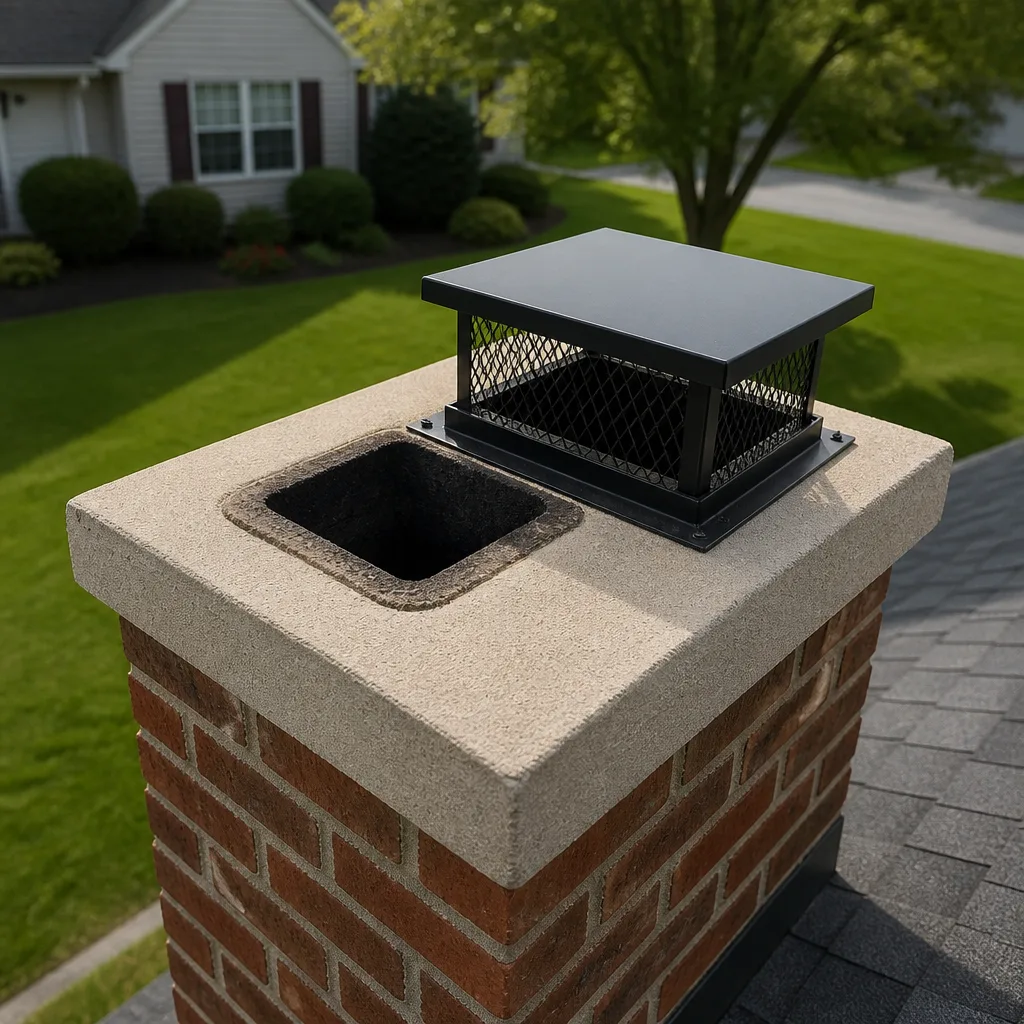
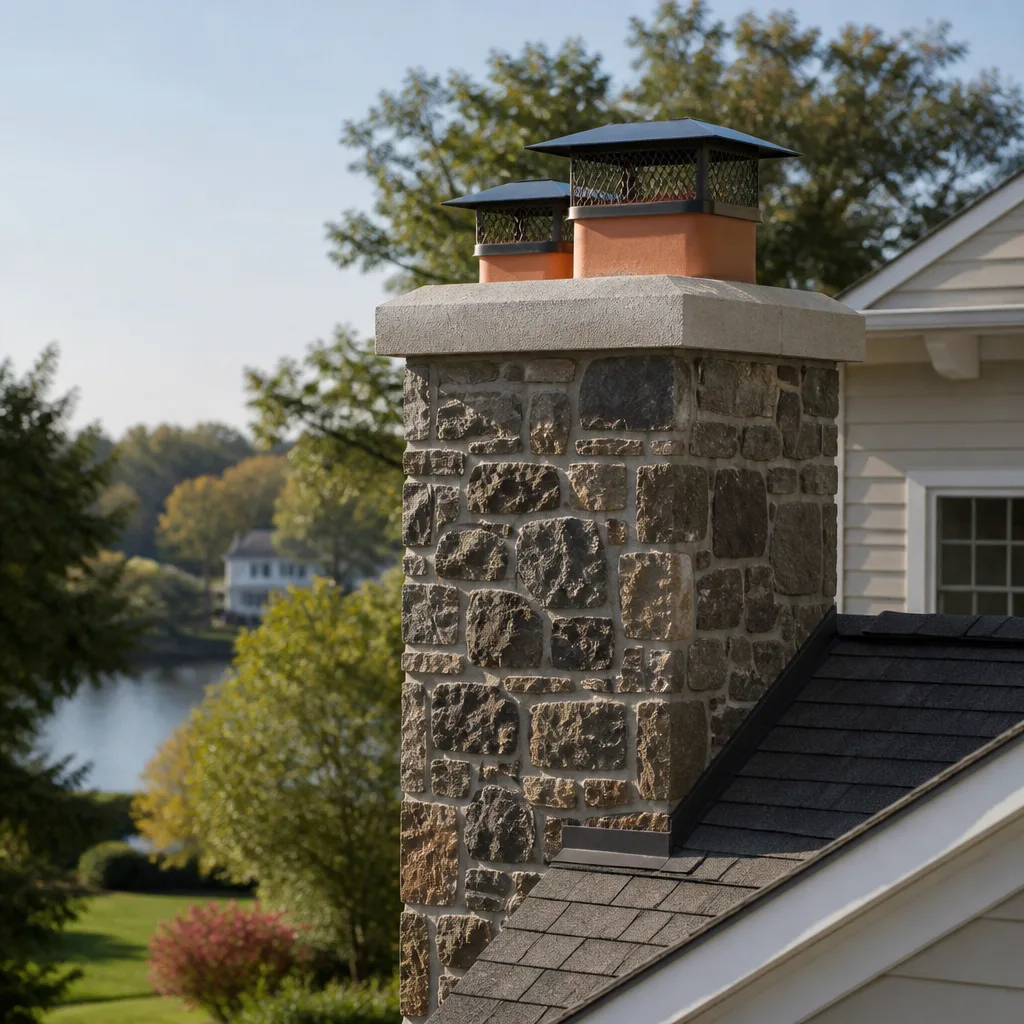
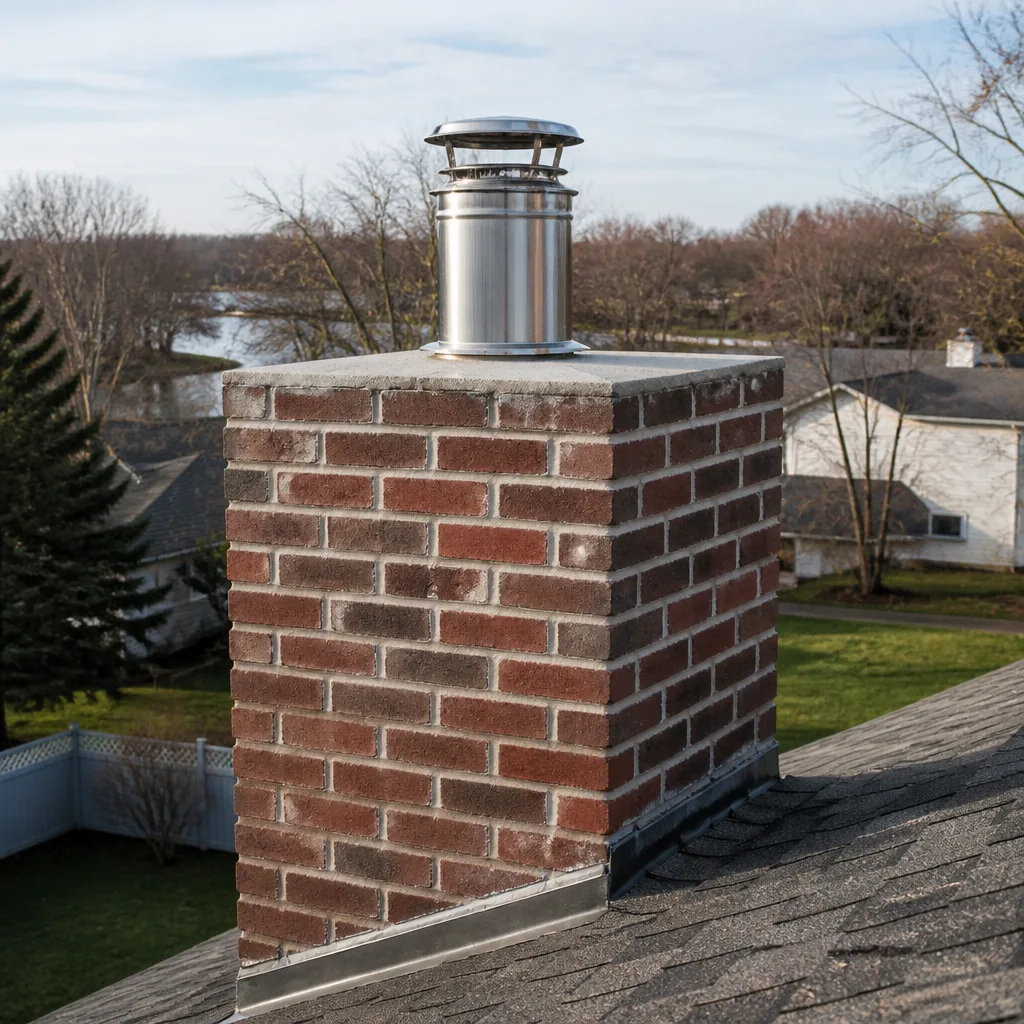
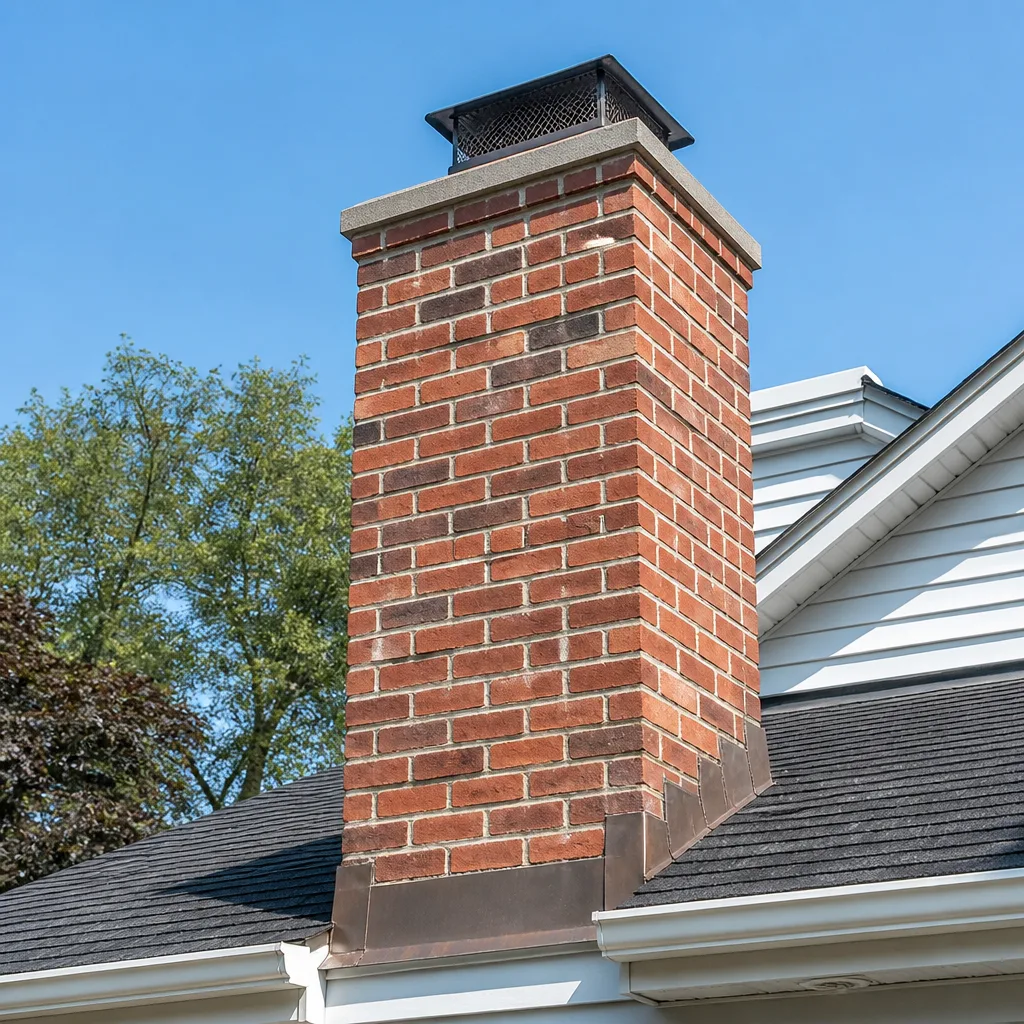
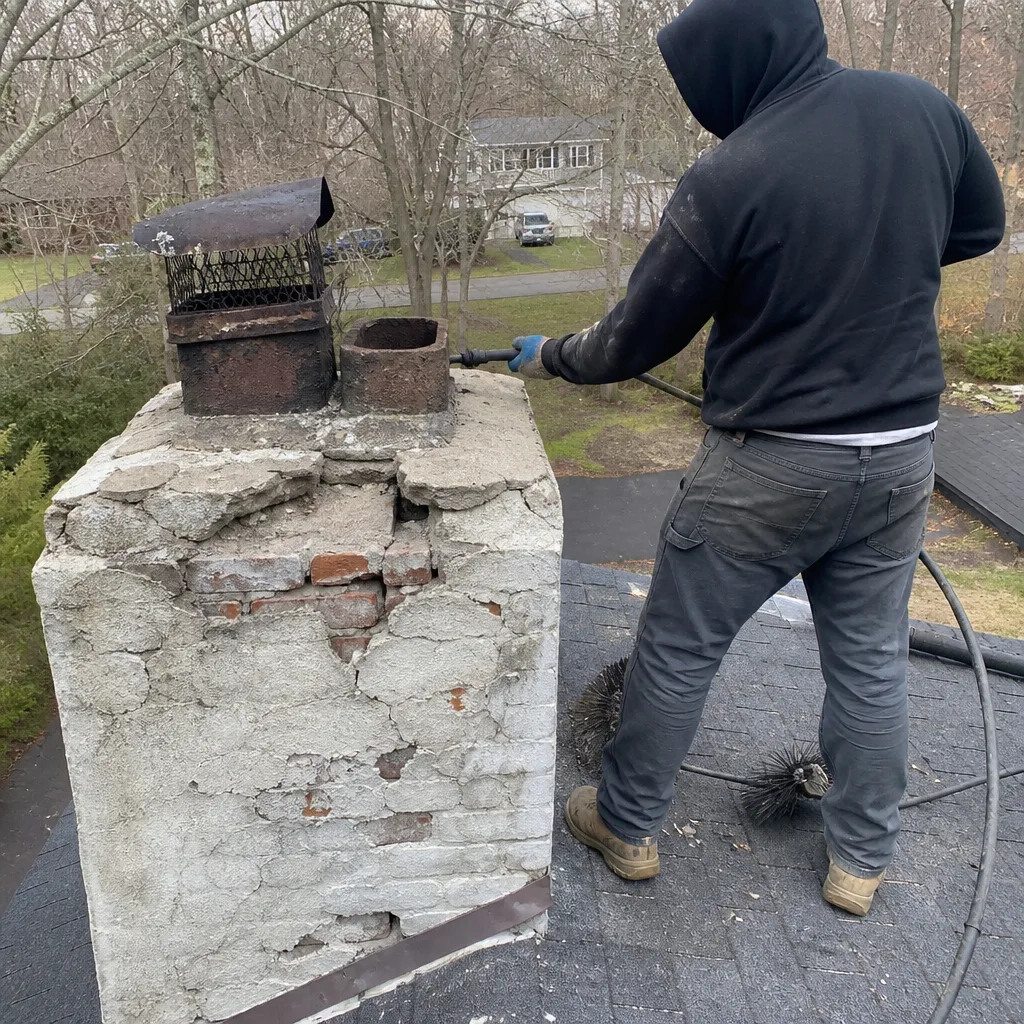 Before
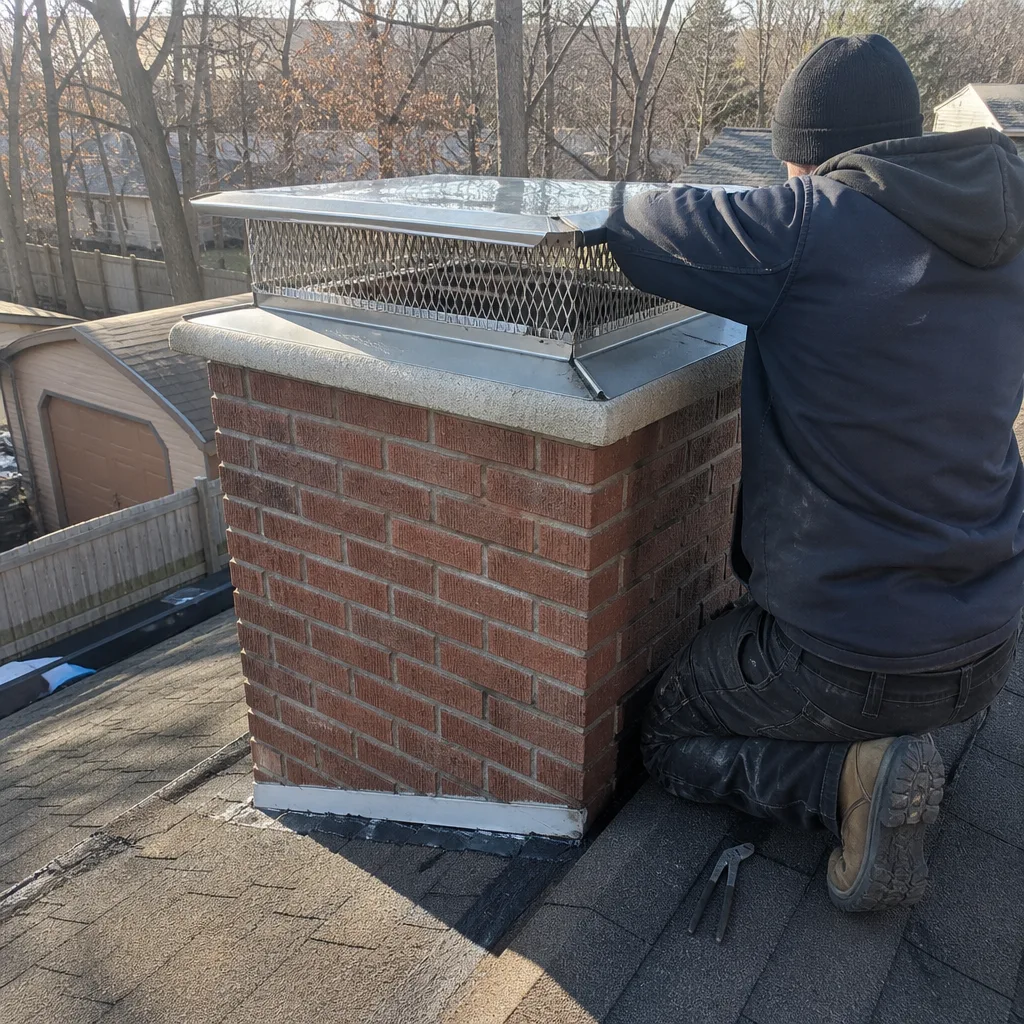 After
After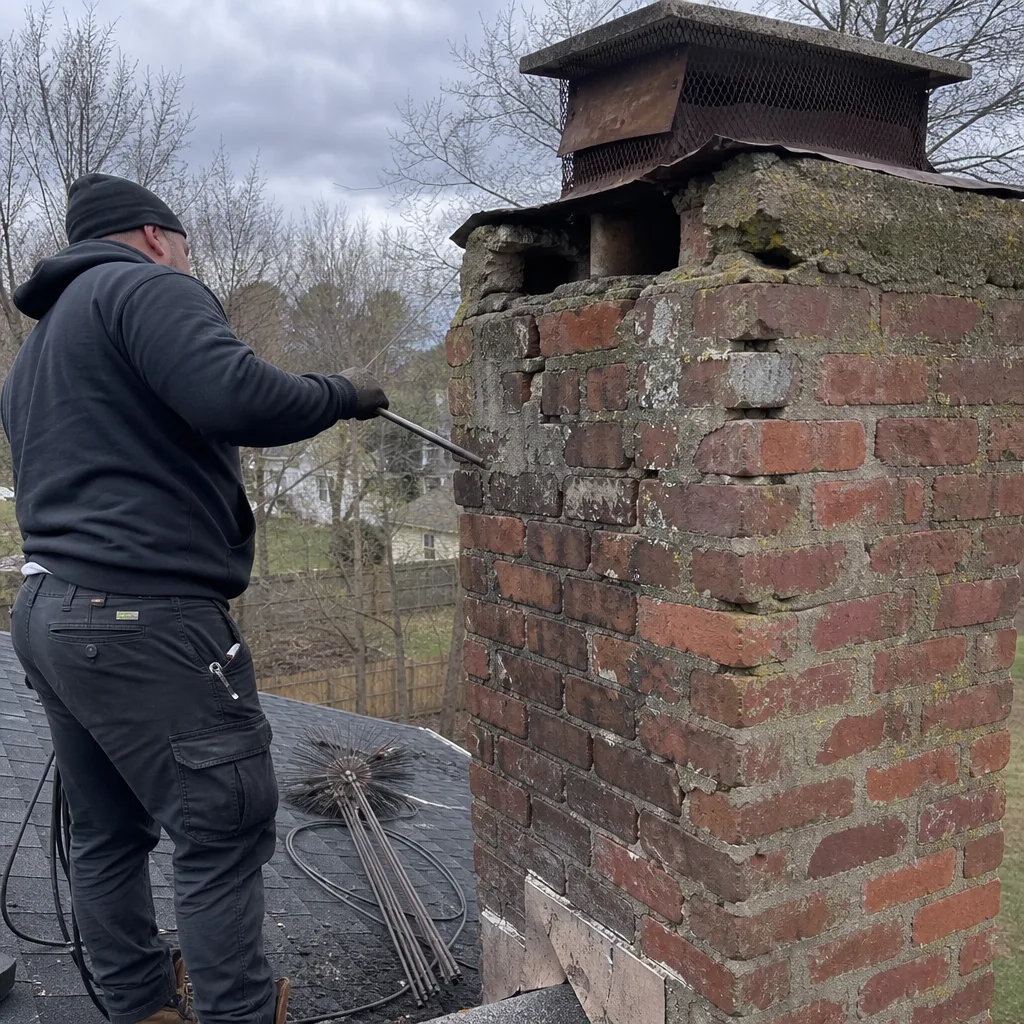 Before
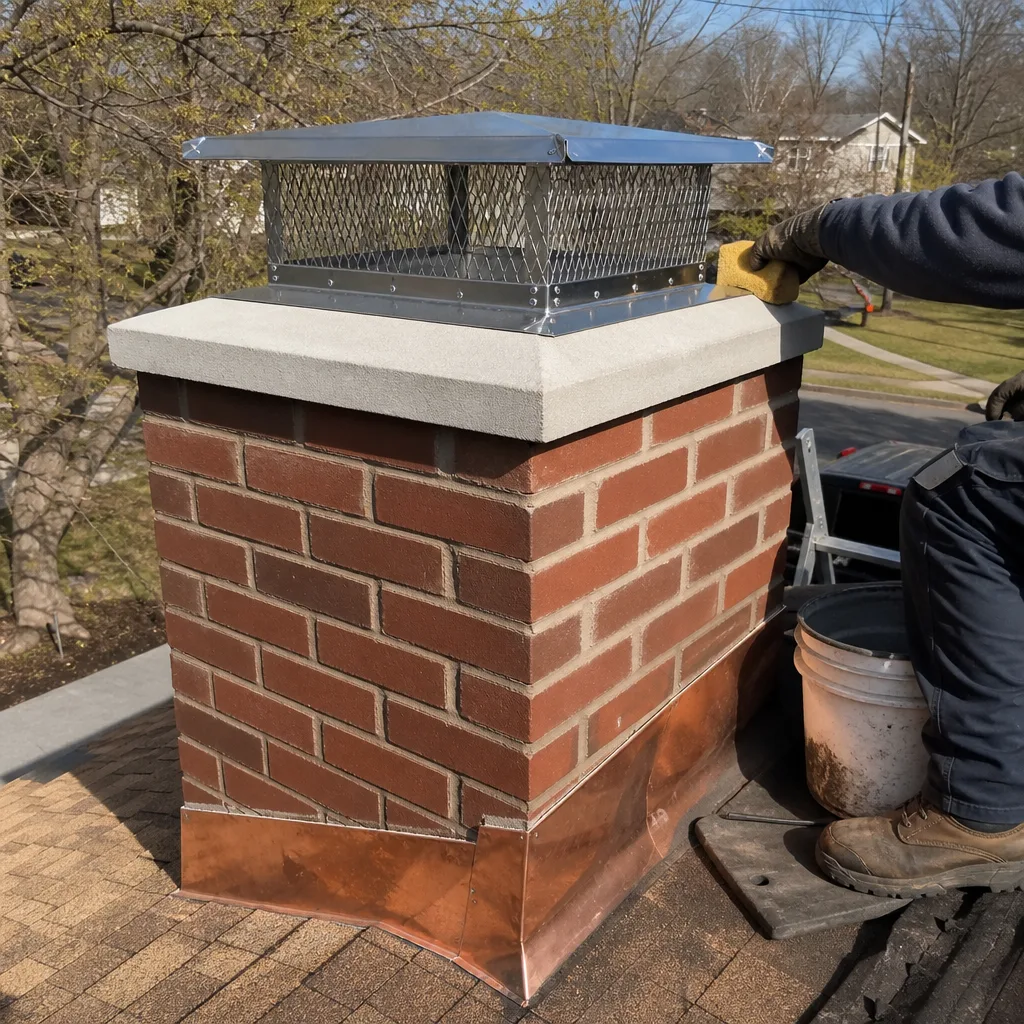 After
After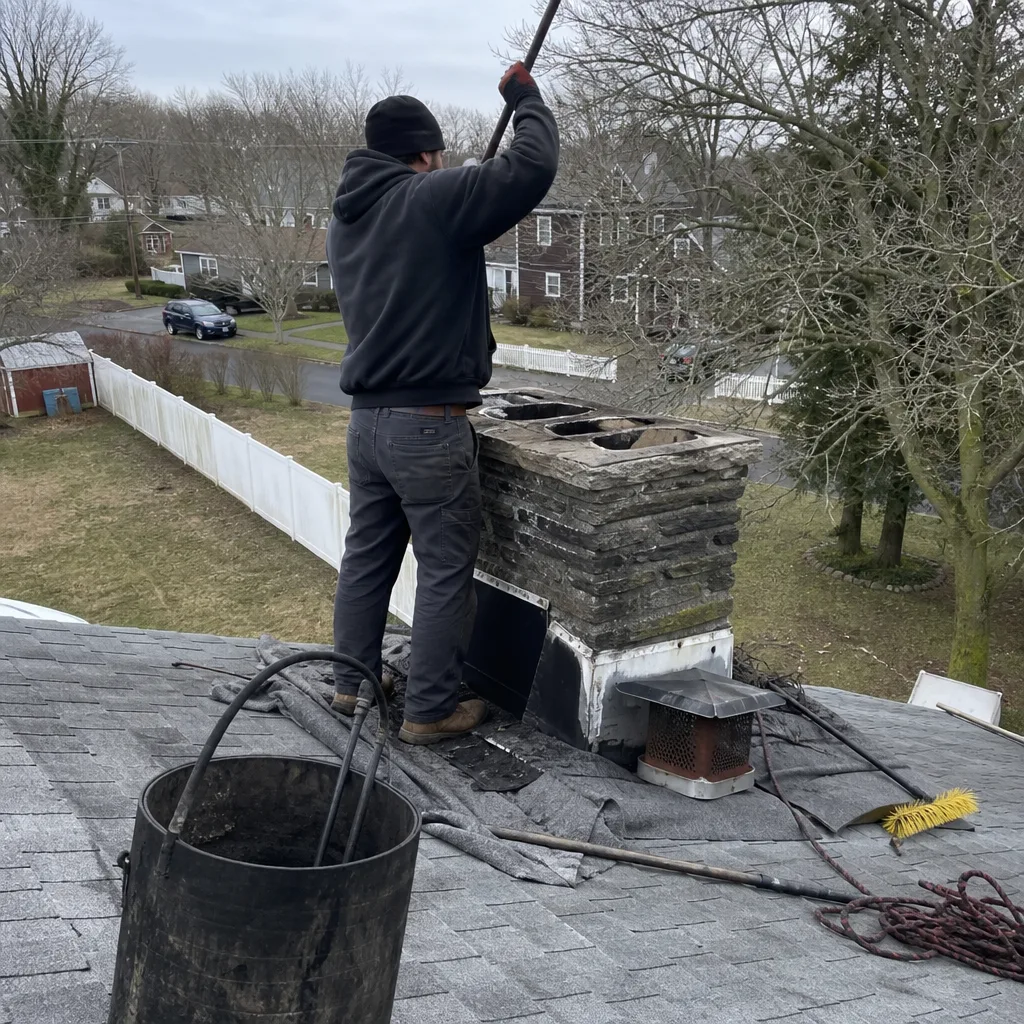 Before
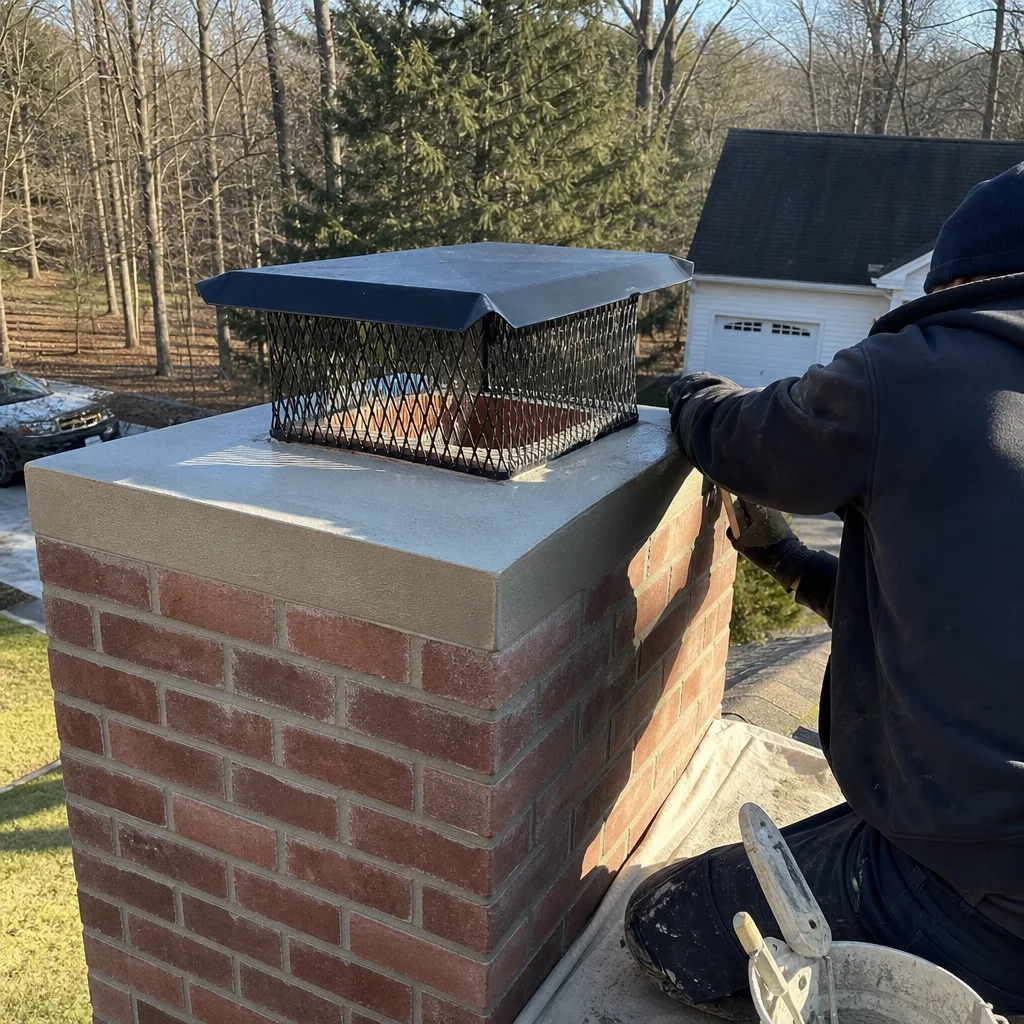 After
AfterChimney Cleaning Warning Signs: A Smithtown Homeowner’s Reference Guide
The most dangerous chimney condition - third-degree creosote glaze - produces almost no smoke or odor during normal burning. Homeowners typically discover it only when a sweep shines a light up the flue, not because the fireplace behaved differently. In Smithtown, where many homes along Jericho Turnpike and Branch Brook Drive were built during the 1970s and 1980s heating boom, we’ve found glaze deposits thick enough to restrict draft by forty percent without the homeowner noticing any change. This guide establishes a plain, visual baseline so you can tell the difference between a cosmetic quirk and a functional failure before it becomes a safety issue.
Quick Answer
Chimney warning signs fall into five categories: creosote buildup visible as shiny black glaze or flaky deposits, masonry damage including white or brown staining and crumbling brick, draft problems shown by smoke back-puffing or cold odors, animal intrusion indicated by debris or sudden draft changes, and structural cracks in the firebox or flue liner. Most serious conditions develop silently; the absence of obvious symptoms does not mean your chimney is safe. A Level-2 camera inspection is the only reliable way to distinguish cosmetic wear from active hazards.
Table of Contents
- Creosote Deposits: The Three Degrees Every Smithtown Homeowner Should Recognize
- Masonry Damage: Reading the Stains, Cracks, and Spalling on Your Chimney
- Draft and Odor Problems: When Your Fireplace Signals System Failure
- Animal Intrusion and Nesting: Signs You’re Missing from the Firebox
- Structural vs. Cosmetic: Knowing What Requires Immediate Action
- How Smithtown’s Coastal Climate Accelerates Chimney Deterioration
- Building Your Annual Inspection Baseline: What to Document
- Common Mistakes to Avoid
- When to Call a Professional
- Frequently Asked Questions
- The Bottom Line
Creosote Deposits: The Three Degrees Every Smithtown Homeowner Should Recognize
Creosote is the byproduct of incomplete wood combustion, and it accumulates in every chimney that burns solid fuel. What matters is not whether you have creosote - you do - but which of the three forms it has taken. Each degree carries a different risk profile and requires a different response. You can make a reasonable preliminary assessment from the firebox opening with a flashlight and a fireplace poker.
First-degree creosote looks like fine black soot or light powder. It brushes off easily with a standard chimney brush. This is normal accumulation after a season of moderate use, and it is what a routine sweep removes. If you wipe the back wall of your firebox and come away with black dust on your finger, you’re seeing first-degree material that has settled below the damper. This is not an emergency, but it is evidence that your flue has active buildup above it.
Second-degree creosote appears as crunchy black flakes or tar-like chunks. It may cling to the damper edges or fall into the firebox when you open the throat. These flakes are porous and highly combustible. They form when the fire burns cooler than optimal - common with Smithtown homeowners who load the firebox tightly and damp it down overnight for long burns. The flakes can ignite at temperatures as low as 451 degrees Fahrenheit, well within normal operating range. If you see material falling from above that resembles burnt corn flakes or broken charcoal, you have second-degree buildup that needs professional removal before the next burning season.
Third-degree creosote glaze is the condition that produces no obvious warning. It presents as a hard, shiny, black or dark brown coating that looks like melted plastic or enamel paint. It is virtually impervious to standard brushing. The surface is smooth and reflective when you shine a light on it. This glaze forms from slow, smoldering fires with insufficient air supply - exactly the kind of overnight burn many Smithtown homeowners favor during January cold snaps when temperatures drop into the teens along the Nissequogue River basin.
Third-degree glaze is the fuel source for chimney fires that burn at over 2,000 degrees, hot enough to crack clay flue liners and ignite adjacent framing. The terrifying part: a chimney fire fueled by glaze can sound like a freight train, or it can be completely silent. We’ve inspected chimneys in the Smithtown area where glaze had reduced the flue diameter by half, and the homeowner reported only that “the fireplace seemed to draft a little slower this year.”
Here’s how to check from the firebox:
- Open the damper fully and wait five minutes for air equalization.
- Shine a strong flashlight upward at a slight angle - direct vertical light creates glare that hides glaze.
- Look for reflective patches, drips that have hardened into ridges, or areas where the flue surface looks wet even when dry.
- Note any restriction: the flue should appear as a clean rectangle or circle from top to bottom. If the opening seems to narrow partway up, that’s buildup, not construction.
Third-degree glaze requires chemical treatment or mechanical removal with specialized equipment. Do not attempt to burn it off. The chimney repair consequences of a glaze-ignited fire in Smithtown’s older housing stock - many with original clay liners from the 1960s and 1970s - frequently involve full liner replacement with stainless steel systems from DuraFlex or Olympia Chimney, not simple sweeping.
Masonry Damage: Reading the Stains, Cracks, and Spalling on Your Chimney
Brick and mortar are not permanent. In Smithtown’s climate, freeze-thaw cycles begin in late October and can continue into April, with coastal moisture from Long Island Sound adding salt-laden humidity that accelerates chemical weathering. Your chimney’s exterior tells a story if you know how to read it.
White staining (efflorescence) looks like chalk dust or salt bloom on the brick surface. It indicates water moving through the masonry, dissolving soluble salts, and depositing them on the surface as it evaporates. The water source may be a failed crown, deteriorated mortar joints, or porous brick absorbing ground moisture. Efflorescence itself is cosmetic, but it proves water is transiting the masonry. In chimneys we’ve inspected near the Caleb Smith State Park Preserve, persistent efflorescence often precedes spalling by two to three seasons. The salt crystals expand inside the brick pores, and when temperatures drop below freezing, they force the face off the brick.
Brown or rust-colored staining on the exterior below the crown or at the roofline indicates metal corrosion - typically the galvanized steel chase cover on prefabricated chimneys, or rust from the flue liner itself bleeding through cracked mortar. Brown stains on the interior firebox walls suggest water mixing with soot and creosote, creating acidic runoff that attacks the masonry from inside. This condition is common in Smithtown’s split-level and ranch homes where the chimney chase runs through an unconditioned attic space prone to condensation.
Spalling brick is masonry damage you can see and feel. The brick face flakes, pops, or crumbles. You may find fragments in the yard or on the roof after a windstorm. Spalling brick has lost its protective hard layer; the softer interior is exposed and will deteriorate rapidly. Once spalling begins, the chimney loses structural integrity at an accelerating rate. We’ve replaced crowns and rebuilt chimney tops in the Kings Park and Nesconset areas where spalling had progressed to the point that individual bricks could be removed by hand.
Mortar joint erosion appears as recessed, sandy, or missing mortar between bricks. You should not be able to insert a pencil more than a quarter-inch into a mortar joint. Deeper recesses allow water penetration, which compounds all other problems. Repointing with proper lime-based mortar - not Portland cement, which is too hard for vintage brick - is the correct repair. Hearthstone technicians use professional-grade materials from Copperfield and Famco for crown and flashing work that prevents the water entry causing joint damage.
A note on vertical cracks in the chimney stack: a hairline crack following the mortar joint is typically thermal expansion. A crack that runs through bricks themselves, or that steps diagonally across multiple courses, indicates foundation settlement or structural movement. The former is monitored; the latter requires engineering assessment. In Smithtown’s glacial till soils, differential settlement is common on homes built without proper footings for the chimney mass.
Draft and Odor Problems: When Your Fireplace Signals System Failure
Draft is the pressure difference that moves combustion gases up and out. When it fails, the symptoms are unmistakable - but homeowners often misattribute them to weather, firewood quality, or “just how this fireplace is.”
Smoke back-puffing on start-up is the most dramatic draft failure. Smoke rolls into the room when you light the fire, then clears after a few minutes. This typically indicates a cold flue, which is correctable by pre-warming with a rolled newspaper torch or by burning kindling with the damper fully open before adding main fuel. But if back-puffing persists after the fire is established, or occurs on windy days regardless of fire stage, you have a pressure or obstruction problem.
Smithtown’s prevailing westerlies, accelerated by the Long Island Sound pressure gradient, can create downdrafts in chimneys shorter than surrounding rooflines or located on the windward side of the house. We’ve corrected persistent back-puffing in homes near the Smithtown waterfront by extending chimney height or installing properly engineered caps that deflect wind without restricting draft. The wrong cap - or a cap clogged with creosote - makes the problem worse.
Cold, musty odor from a closed fireplace is not normal. A properly constructed chimney with a functional damper should not transmit significant odor into the living space. When you smell chimney odor on humid summer days or when the air conditioning runs, it indicates:
- A deteriorated or missing damper seal, allowing house air to communicate with the flue
- Significant creosote accumulation absorbing humidity and releasing odor
- Water entry creating mold or mildew on soot deposits
- An animal carcass or nesting material decomposing in the flue
The odor profile helps diagnose the cause. Sharp, acrid smell suggests active creosote. Earthy, mold-like smell indicates water damage. Organic, decaying smell means animal matter. Sulfur or rotten-egg smell is dangerous - it may indicate a gas leak if you have a gas log set, or hydrogen sulfide from anaerobic bacterial growth in standing water within a blocked flue.
Difficulty establishing or maintaining draft shows as a fire that smolders, produces excessive smoke, or requires the door or window to be cracked open. This can indicate:
- Competing appliances: kitchen exhaust fans, dryers, or whole-house fans creating negative pressure that overwhelms chimney draft. Modern tight construction in Smithtown’s renovated colonials often produces this imbalance.
- Flue obstruction: creosote buildup, collapsed liner, or animal nest reducing flue area below the critical threshold for the fireplace opening size.
- Liner failure: cracked clay tiles or separated stainless steel sections allowing dilution of flue gases and temperature drop.
- House depressurization: HVAC return ducts or imbalanced supply registers lowering pressure in the fireplace zone.
A simple diagnostic: on a calm day, light a match and hold it near the firebox opening with the damper open. The flame should lean toward the flue. If it stands vertical or leans into the room, you have negative or neutral pressure. If it flickers erratically, you have turbulent flow suggesting partial obstruction.
Animal Intrusion and Nesting: Signs You’re Missing from the Firebox
Animals enter chimneys for the same reasons humans built them: shelter from weather, elevation from predators, and thermal mass that moderates temperature swings. Smithtown’s mix of mature oak woodland, suburban density, and waterfront habitat supports raccoons, squirrels, chimney swifts, starlings, and occasionally bats. Each leaves distinct evidence.
Raccoons are the most destructive. They can dislodge clay flue tiles, bend stainless steel caps, and deposit feces that carry roundworm eggs dangerous to humans. Signs include: heavy, thumping sounds at dusk or dawn; large, tubular droppings on the smoke shelf or damper; and a strong, musky odor distinct from creosote. Raccoons typically enter through damaged crowns or uncapped flues and can descend to the damper level. If you hear vocalizations that sound like chittering or growling, you have an active den, likely with young from March through June.
Squirrels build compact, leaf-and-twist nests that block flues completely. Their entry is often quieter - scratching and scurrying rather than thumping. You may find acorn shells, stripped bark, or shredded insulation in the firebox. Red squirrels, common in Smithtown’s older neighborhoods with mature trees, pack nests tightly enough to support combustion if ignited by stray sparks. A squirrel nest fire typically burns with a low roar and may self-extinguish from oxygen starvation, but the heat transfer damages liners.
Chimney swifts are protected under the Migratory Bird Treaty Act. They cannot be removed during nesting season (May through August) without federal permit. Their nests are small, half-cup constructions of twigs cemented with saliva, attached to the flue wall. Signs include: rapid, chittering flight sounds; small, dark droppings accumulating below the damper; and the distinctive appearance of the birds themselves - cigar-shaped bodies with long, swept-back wings - entering or exiting at dusk. If swifts are present, schedule your sweep for September or later, after migration.
Starlings and house sparrows are not protected and nest in chimney flues frequently. Their nests are loose, bulky, and highly flammable - grass, straw, paper, and plastic debris. Multiple broods per season mean nests may be rebuilt after removal. Signs include: constant, varied chirping; fluttering sounds as adults enter and exit; and debris falling into the firebox including eggshell fragments and feathers.
Bats roost in cool, vertical spaces and may colonize unused flues. Guano accumulation has a crystalline, sparkling appearance under light and produces ammonia odor in quantity. Bat entry requires only a half-inch gap. If you see bats exiting at dusk or find single bats in the living space, inspect the chimney exterior at roofline for staining and the flue for guano deposits.
The debris type tells you the species:
- Twigs, leaves, compact structure: squirrel or raccoon
- Small sticks, saliva-cemented, attached to wall: chimney swift
- Loose grass, straw, paper, plastic: starling or sparrow
- Shiny, crystalline pellets with ammonia smell: bat guano
- Single large feathers, downy undercoat: owl (rare, indicates large uncapped flue)
Never attempt to smoke out animals. It is inhumane, ineffective against many species, and creates fire hazard from nesting material. A professional removal followed by proper capping with animal-proof mesh from Famco or Copperfield prevents recurrence.
Structural vs. Cosmetic: Knowing What Requires Immediate Action
Not every imperfection in a chimney is dangerous. The skill is knowing which conditions permit continued use with monitoring, which require repair before next use, and which mean stop immediately. Here is the distinction we apply during every inspection in Smithtown.
Stop using the fireplace immediately if you observe:
- Visible flame or glowing ember in the chimney structure outside the firebox. This indicates a chimney fire in progress or liner breach allowing combustion in the wall cavity. Evacuate and call the fire department. Do not attempt to extinguish from inside.
- A crack in the firebox that passes completely through the refractory panel or masonry, especially if you can see light or house framing through it. The firebox is the combustion zone; its integrity contains the fire. A through-crack allows direct flame contact with combustible structure. This is not a “monitor and see” condition.
- Collapsed or dislodged flue liner segments visible from the firebox opening, or a liner that has shifted to create an exposed gap. Combustible gases and sparks can enter the chimney chase and ignite framing. This condition often follows a chimney fire or freeze-thaw damage in unlined exterior chimneys common in Smithtown’s 1950s and 1960s ranch construction.
Schedule repair before next burning season if you observe:
- Spalling brick or eroded mortar that has not yet exposed the chimney interior
- Deteriorated crown with cracks but intact structural base
- Failed or missing chimney cap allowing water and animal entry
- Second-degree creosote accumulation covering more than one-eighth of flue surface
- Damper that does not fully close or seal, causing summer odor and heat loss
- Smoke staining on the fireplace face indicating chronic minor back-puffing
Monitor and address at routine maintenance if you observe:
- Minor efflorescence without associated spalling or joint erosion
- Hairline thermal cracks in firebox refractory that do not pass through
- First-degree creosote accumulation
- Slight mortar recession less than one-quarter inch
- Cosmetic smoke staining on exterior chimney face from previous, resolved draft issue
The critical judgment is whether a condition compromises the chimney’s ability to contain fire and vent combustion products. Cosmetic weathering does not. Structural breach does. When in doubt, a Level-2 camera inspection removes doubt entirely - photos you can see, a plain-English verdict.
How Smithtown’s Coastal Climate Accelerates Chimney Deterioration
Smithtown sits on the north shore of Long Island, exposed to prevailing westerlies across Long Island Sound and the moderating but moisture-laden influence of the Atlantic. This geography creates specific conditions that accelerate chimney wear compared to inland or southern exposures.
Freeze-thaw frequency: The coastal temperature regime produces more freeze-thaw cycles than areas farther from water. Temperatures cross 32 degrees Fahrenheit more often in Smithtown than in Riverhead or points east, and more than in Queens or Brooklyn where urban heat island effect moderates swings. Each cycle forces water in masonry pores to expand nine percent in volume. Over a typical Smithtown winter, a chimney may experience 50 to 80 complete cycles. After fifteen years, that’s over 1,000 stress events.
Salt-laden moisture: Long Island Sound carries dissolved salts in sea spray, particularly during nor’easters and winter storm events. These salts are hygroscopic - they attract and hold moisture against masonry surfaces. Salt crystallization pressure exceeds freeze-thaw pressure in some conditions. Chimneys within a mile of the water, from Saint James to Nissequogue, show accelerated efflorescence and spalling compared to identical construction inland.
Vegetation density: Smithtown’s mature tree canopy, protected by local ordinances and valued by residents, produces organic debris that accumulates on chimney crowns and in gutters. Decaying leaves hold moisture against masonry and provide nesting material for animals. Oak catkins in spring and leaf drop in autumn create two peak accumulation periods.
Heating degree days: Smithtown accumulates approximately 4,500 heating degree days annually, meaning substantial fireplace and wood stove use from October through April. More use means more creosote production, more thermal cycling of refractory materials, and more opportunity for minor defects to propagate. Homes in the Smithtown service area that burn three or more cords per season - common in the historic districts along Main Street where original heating systems remain - require mid-season inspection, not just annual.
The practical implication: a chimney in Smithtown ages faster than identical construction in drier, more stable climates. The “every other year” sweep schedule adequate in some regions is insufficient here. Annual inspection and cleaning, with camera documentation to track progression, is the minimum prudent maintenance.
Building Your Annual Inspection Baseline: What to Document
The most useful thing a homeowner can do is establish a personal reference point. Chimney conditions change slowly, and without documentation, you cannot distinguish this year’s normal from last year’s early warning. We recommend a simple annual protocol.
Exterior documentation (do this yourself in September, before sweep arrival):
- Photograph all four sides of the chimney from ground level, using the same standing position each year. Include the roofline and cap in frame.
- Photograph the crown from the closest safe vantage - second-floor window, ladder at gutter level, or zoom from ground.
- Note any new staining, spalling, or vegetation growth. Compare to previous year’s images.
- Check the cleanout door at the chimney base (if present) for debris accumulation or odor.
Interior documentation (during professional inspection):
- Request the camera inspection video or still frames showing the full flue length. Reputable sweeps provide this without asking.
- Ask for measurement of any cracks - length, width, orientation.
- Request creosote thickness measurement at multiple points, not just a general “it needs cleaning” verdict.
- Obtain written condition rating for each component: firebox, damper, smoke chamber, flue liner, crown, cap, flashing.
Keep these records with your home maintenance file. When you call for a second opinion or sell the home, dated documentation establishes condition history. At Hearthstone, our Level-2 inspections include digital photo reports with annotated images - the plain-English verdict that lets you compare year to year without interpreting technical jargon.
If your sweep cannot or will not provide this documentation, that is itself a warning sign. A craftsman stands behind measurable work, not vague assurances.
Common Mistakes to Avoid
- Assuming no odor means no problem. Third-degree creosote, liner cracks, and early-stage water damage frequently produce no detectable odor. The absence of smell is not evidence of safety.
- Judging chimney condition by firebox appearance alone. The firebox is the easiest part to see and the least informative. Conditions above the damper, in the smoke chamber, and within the flue determine safety. These require camera inspection.
- Using chimney cleaning logs as substitute for sweeping. Chemical logs may reduce light soot but do not remove second- or third-degree creosote and provide no inspection of structural conditions. They are maintenance adjuncts, not replacements.
- Ignoring seasonal timing. In Smithtown, sweeps book solid by mid-October. Waiting until first cold snap means delayed service, rushed work, or hiring from desperation rather than qualification. Schedule in August or September.
- Hiring based on lowest price without verifying scope. A “chimney sweep” quote may include only brushing the flue, while a Level-2 inspection with camera, photo report, and written condition assessment costs more but delivers actual information. Compare deliverables, not just dollars.
- Continuing to use a fireplace after any chimney fire, however minor it seemed. Even a brief, self-extinguished chimney fire can crack clay tiles, damage mortar, or dislodge liner segments. The damage is above your sightline and requires professional assessment before next use.
- Neglecting the cleanout. The ash dump and cleanout door at the chimney base are frequent omission points in homeowner maintenance. Accumulated ash and debris block drainage, hold moisture, and provide nesting substrate for rodents.
When to Call a Professional
Call a certified chimney professional when you observe any of the three immediate-stop conditions above, when annual inspection is due, when you purchase a home with an unknown chimney history, or when any change in fireplace behavior persists beyond two uses. Document what you observed - photos, odors, sounds, timing - before the call. Specific information produces specific answers.
Hearthstone Chimney Co. offers free estimates in Smithtown. A live person answers every call, 24 hours a day, 7 days a week - not a voicemail, not a callback queue. Our background-checked, uniformed technicians complete most jobs in a single visit, with no-hassle upfront pricing so the number on the estimate is the number on the invoice. Every inspection includes camera documentation and a plain-English verdict. All work is covered by our 90-Day Done Right Promise: in writing, no arguing - if it’s not right, we make it right.
Call (631) 814-2057 to schedule your inspection or request a free estimate.
Frequently Asked Questions
A standard Level-1 chimney sweep and inspection in Smithtown typically ranges from $200 to $350, while a Level-2 inspection with camera documentation runs $350 to $550 depending on chimney height, accessibility, and number of flues. Hearthstone offers an $89 Seasonal Tune-Up for qualifying systems during our August-September booking window. Call (631) 814-2057 for an exact quote - estimates are free.
Original clay tiles can remain serviceable for decades if intact, properly bedded, and appropriately sized for your appliance. You need liner replacement when tiles are cracked, missing, or flaking; when the flue is oversized for modern, efficient appliances; or when a chimney fire has damaged the system. We document every recommendation with camera photos you can see, and we plainly state when work can safely wait. A second opinion is always your right - Hearthstone provides free second opinions on any written estimate.
The National Fire Protection Association recommends annual inspection, with cleaning frequency determined by use and fuel type. In Smithtown’s climate with typical hardwood burning of two to three cords per season, most chimneys need annual sweeping. Heavy use, marginal firewood (insufficiently seasoned), or slow-burning practices may require mid-season cleaning. Third-degree creosote can develop in a single season under adverse conditions. Annual inspection establishes whether cleaning is needed; the inspection itself is not optional.
Skipped maintenance allows creosote accumulation to progress from manageable first-degree to hazardous third-degree glaze, permits minor masonry damage to propagate to structural failure, and misses liner deterioration that could allow combustion gases or fire into wall cavities. The most common consequence we see in Smithtown’s long-owned homes is a chimney fire that cracks the liner, followed by water entry through resulting gaps that destroys adjacent framing. Prevention costs a fraction of remediation. Call (631) 814-2057 to schedule before burning season.
Homeowners can and should perform basic exterior observation and firebox checks as described in this guide. However, the critical inspection areas - the full flue length, smoke chamber, and hidden portions of the firebox - require specialized camera equipment, proper lighting, and training to interpret. A Level-2 inspection by a certified professional is the only method recognized by the NFPA for real estate transactions and for assessing chimney safety after a fire or significant weather event. Your own observations inform the professional; they do not replace the professional.
The $89 Seasonal Tune-Up is Hearthstone’s pre-season service package available during August and September booking, subject to qualification based on chimney type and condition history. It includes a Level-1 sweep and inspection, damper adjustment and lubrication, firebox refractory check, and exterior condition assessment. It does not include camera inspection or repair work. Call (631) 814-2057 to confirm your chimney qualifies and reserve a slot - these appointments fill quickly in Smithtown.
The Bottom Line
Chimney warning signs are present long before they become emergencies, but they require knowing what normal looks like. The absence of obvious symptoms - no smoke, no odor, no visible flame - does not establish safety. Third-degree creosote, liner cracks, and early water damage develop silently. Your best protection is annual inspection with camera documentation, a personal baseline of photos and measurements, and the judgment to stop using the fireplace when structural integrity is in question. In Smithtown’s coastal climate, maintenance deferred becomes repair compounded. The cost of knowing is modest; the cost of guessing can be everything.
Written by Russell Haines, Owner at Hearthstone Chimney Co., serving Smithtown since 2014.