
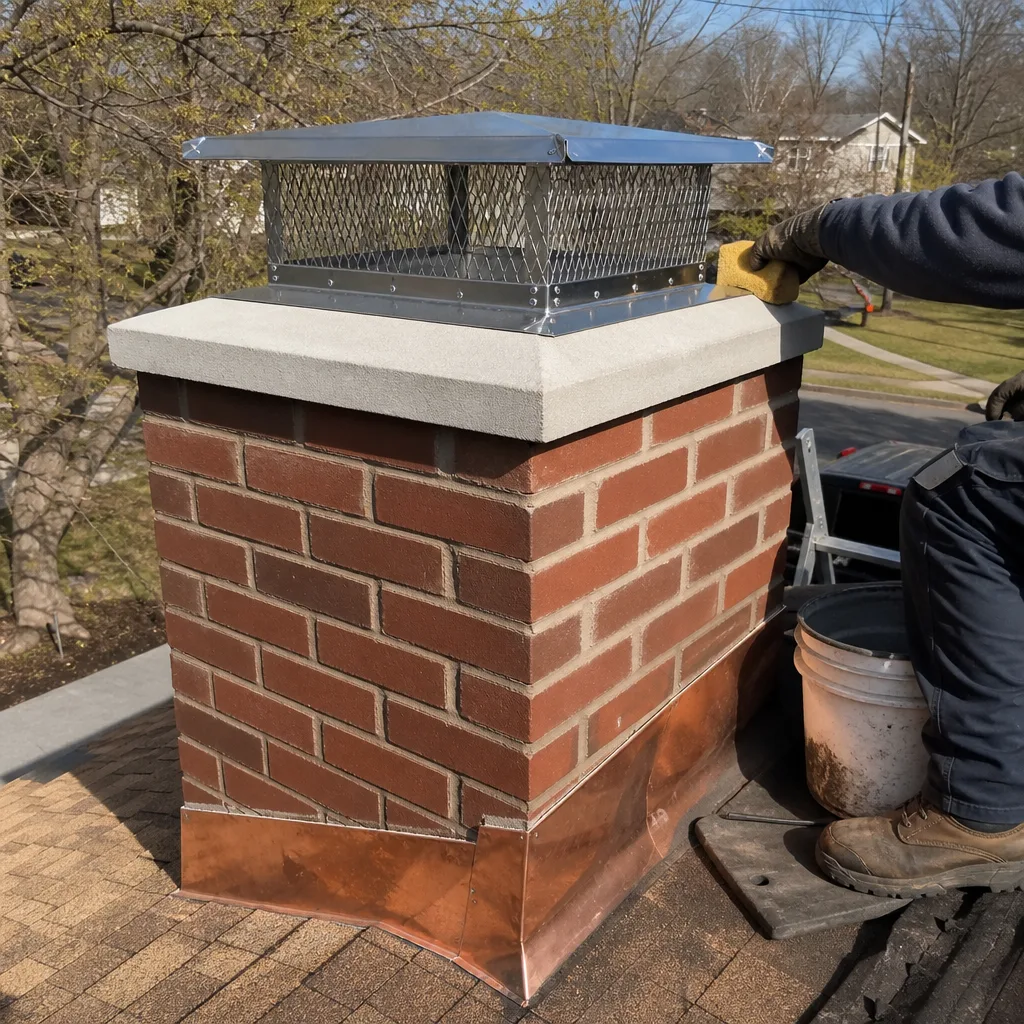
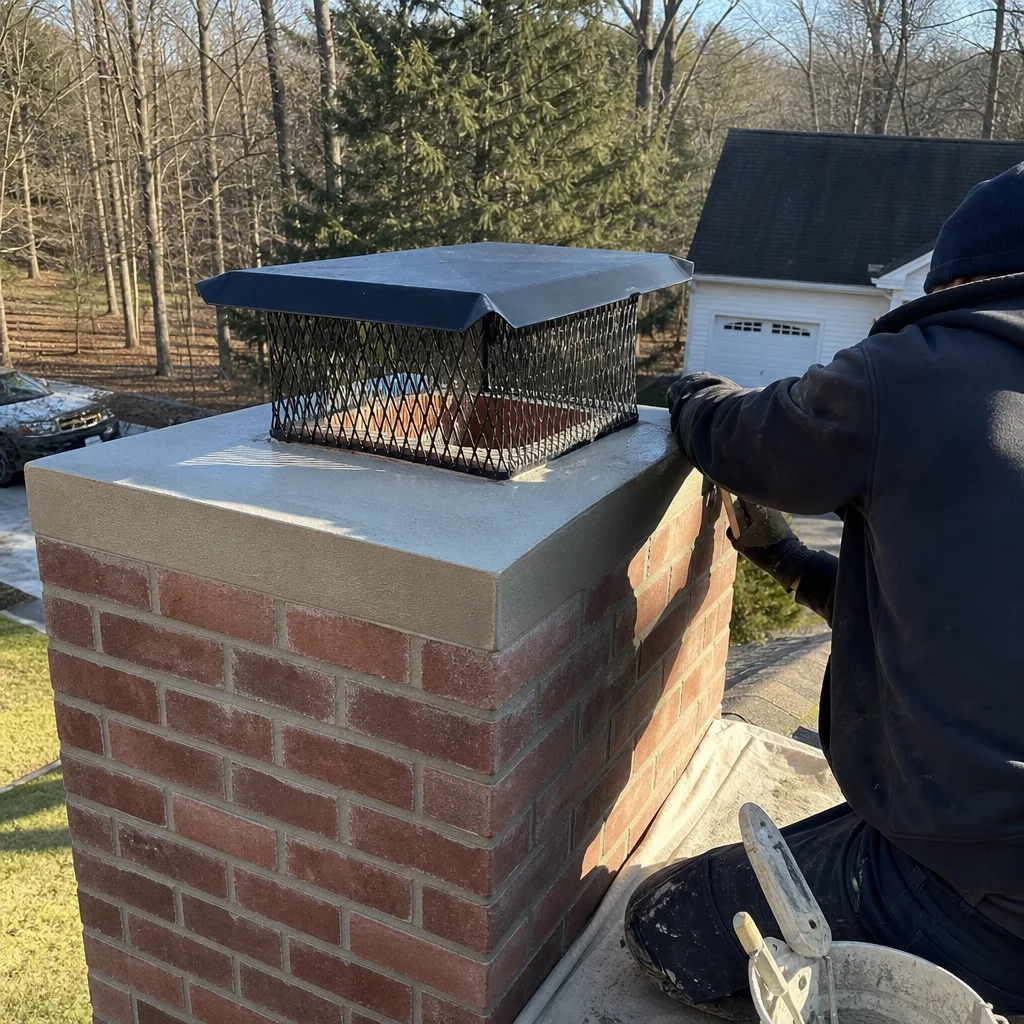
Level 1 sweep and inspection to the NFPA 211 annual standard - flue, crown, cap, and flashing checked and photographed
Chimney sweep logs do not sweep chimneys. They loosen some creosote - which then falls where a brush and vacuum still have to collect it.
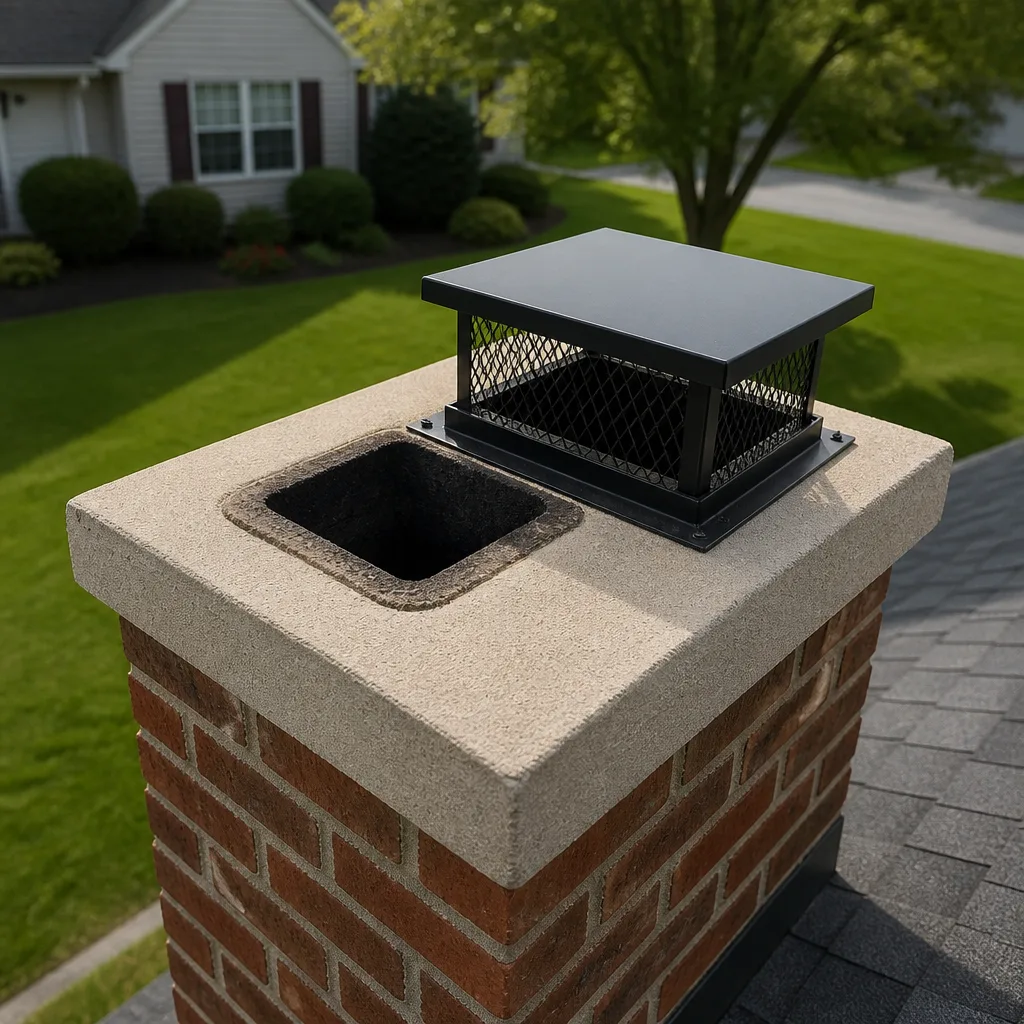
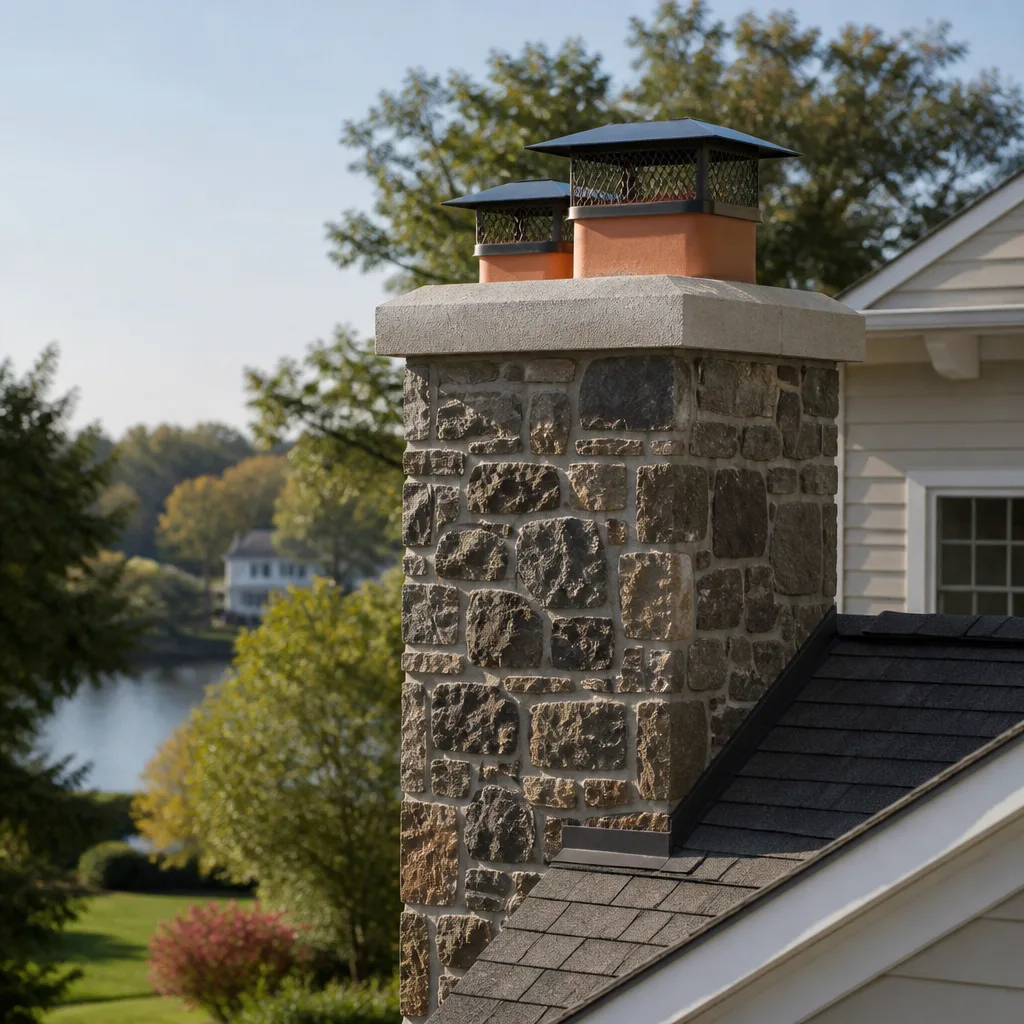
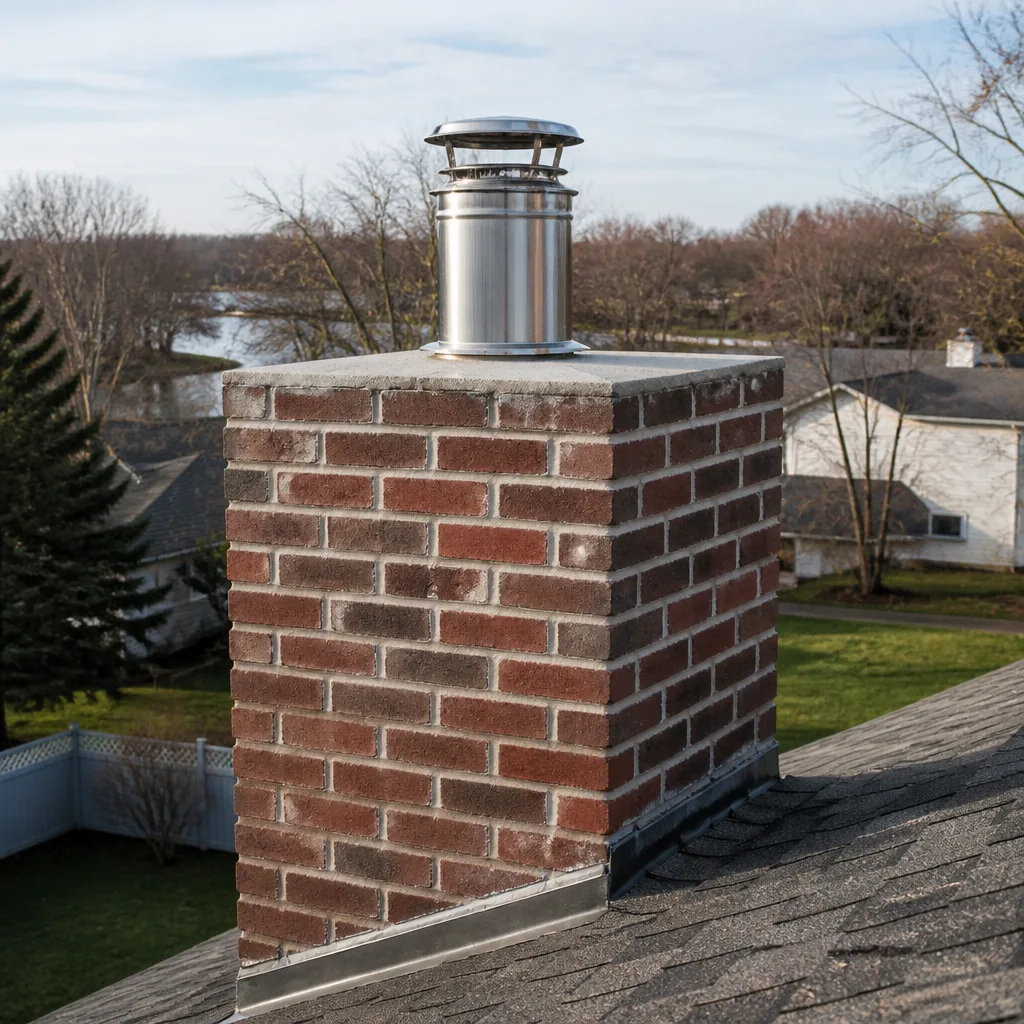
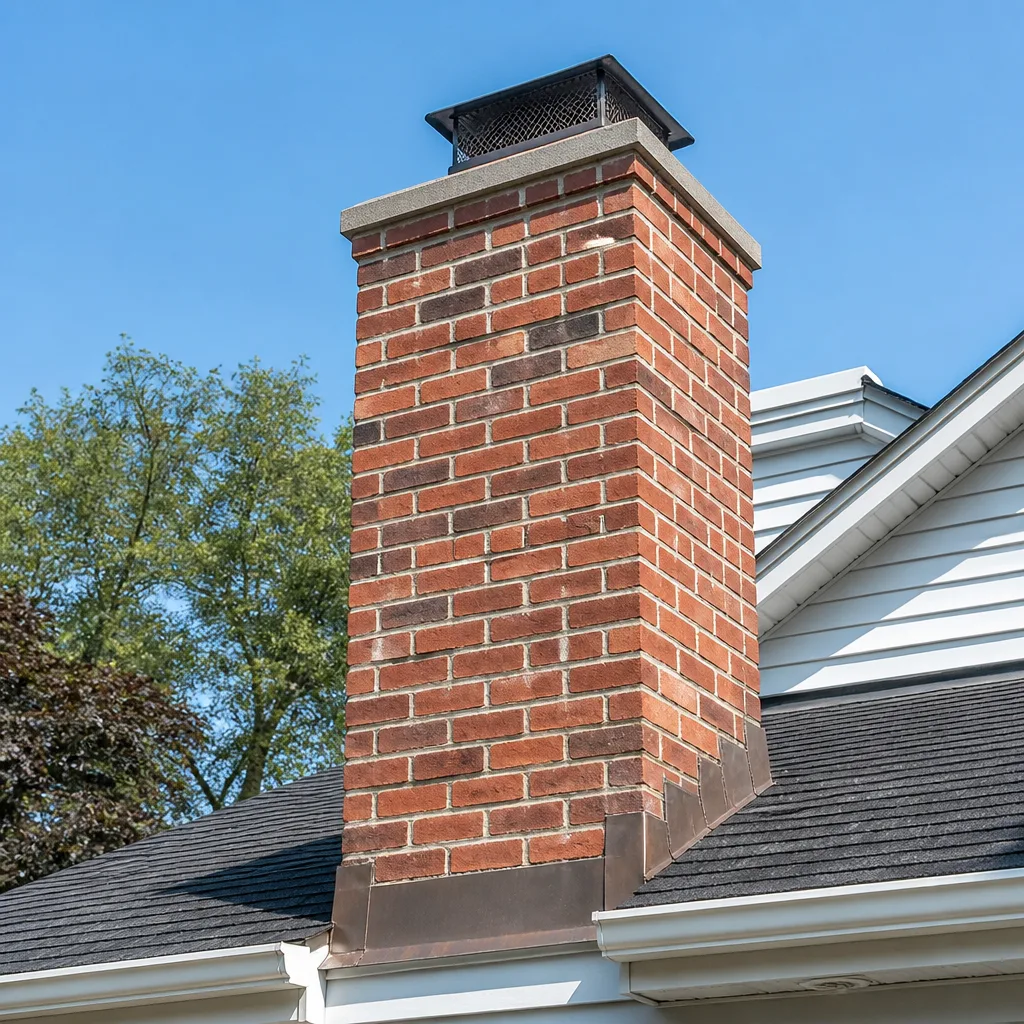
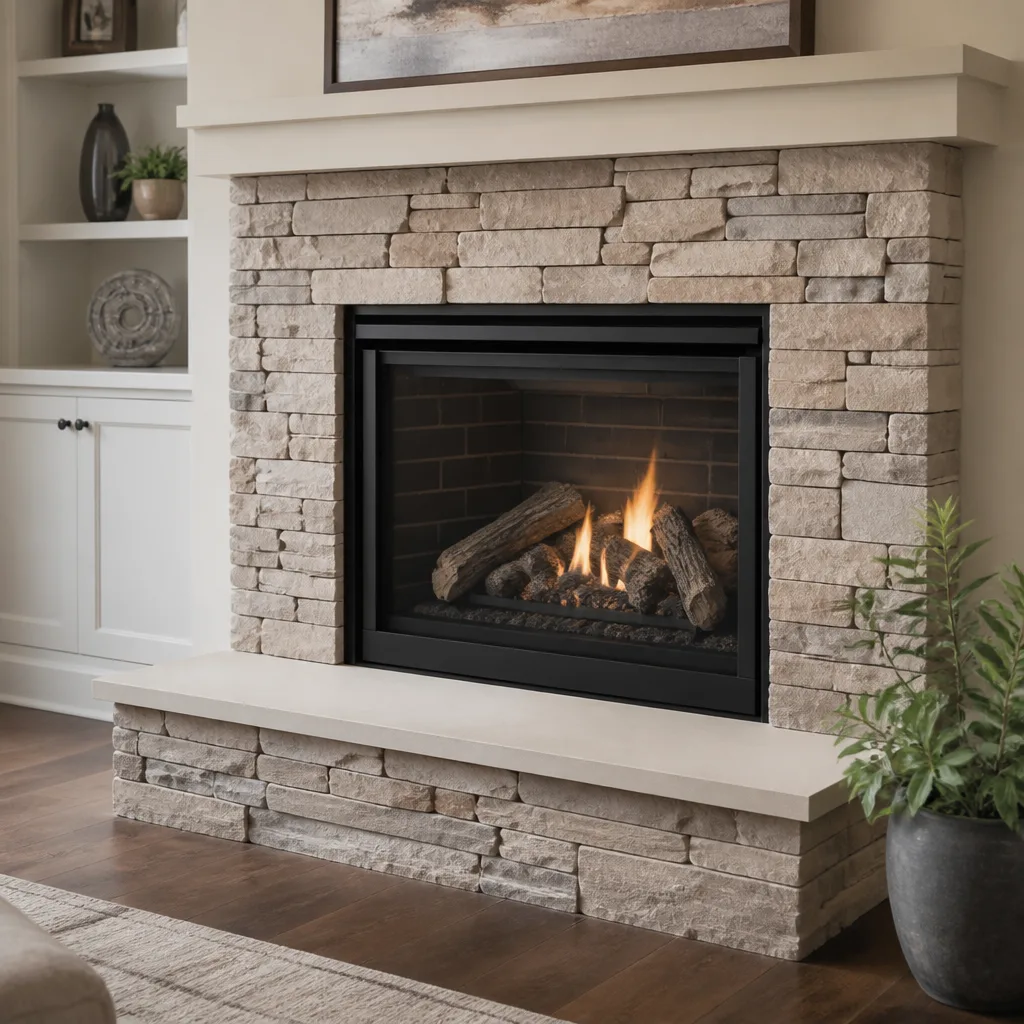
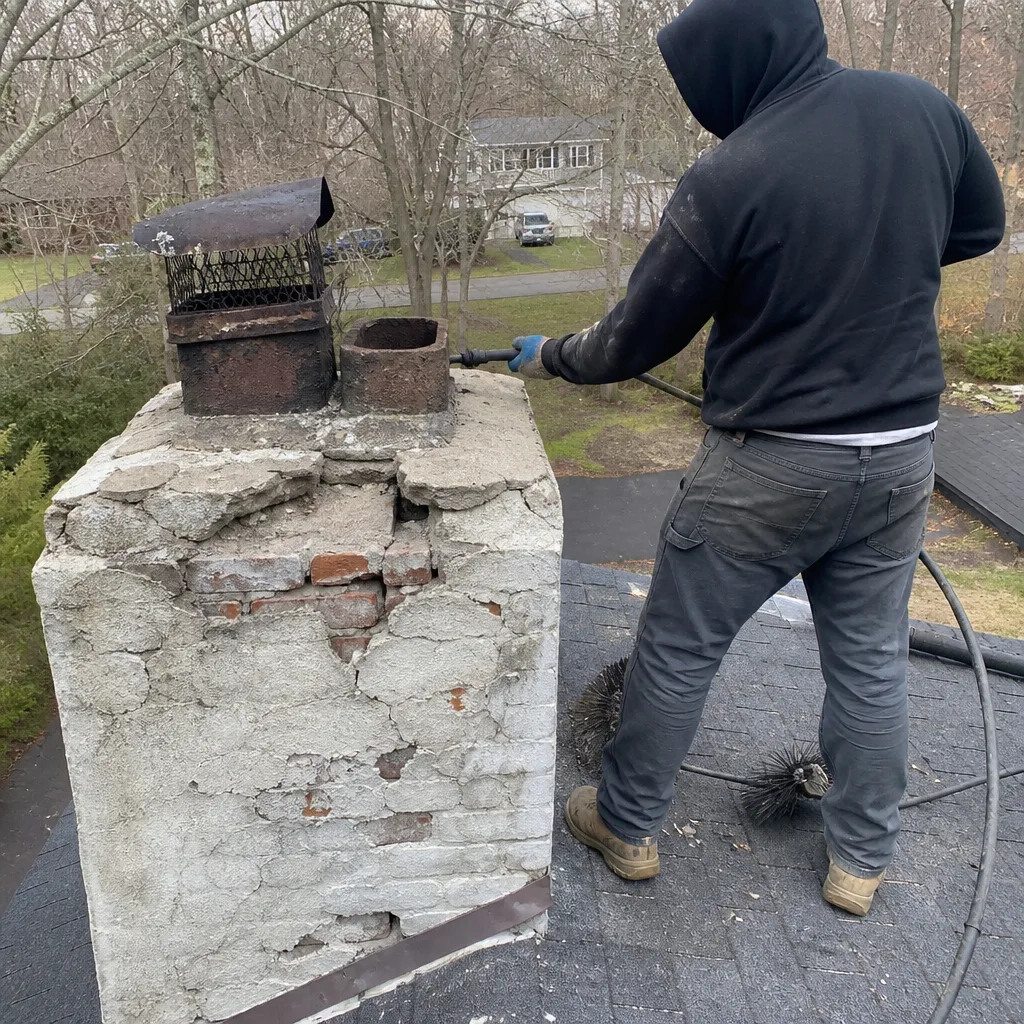 Before
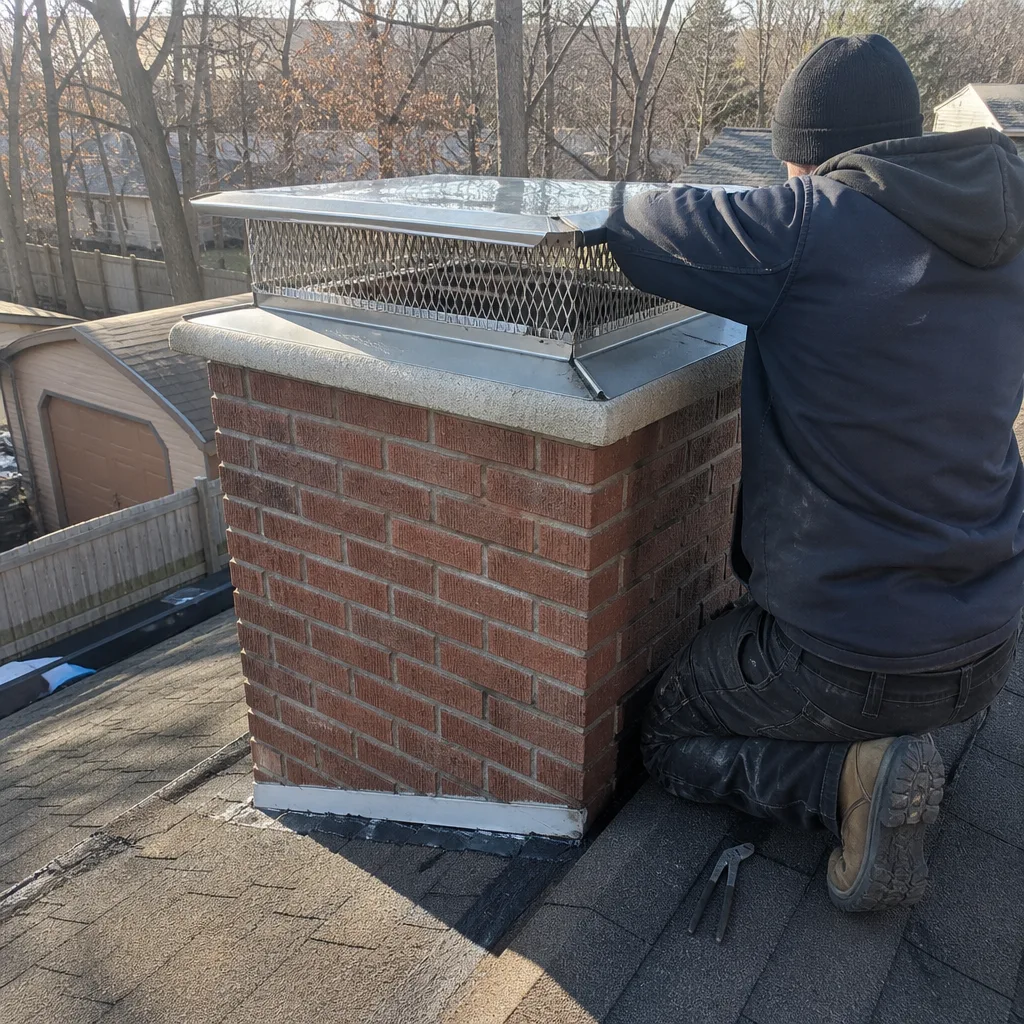 After
After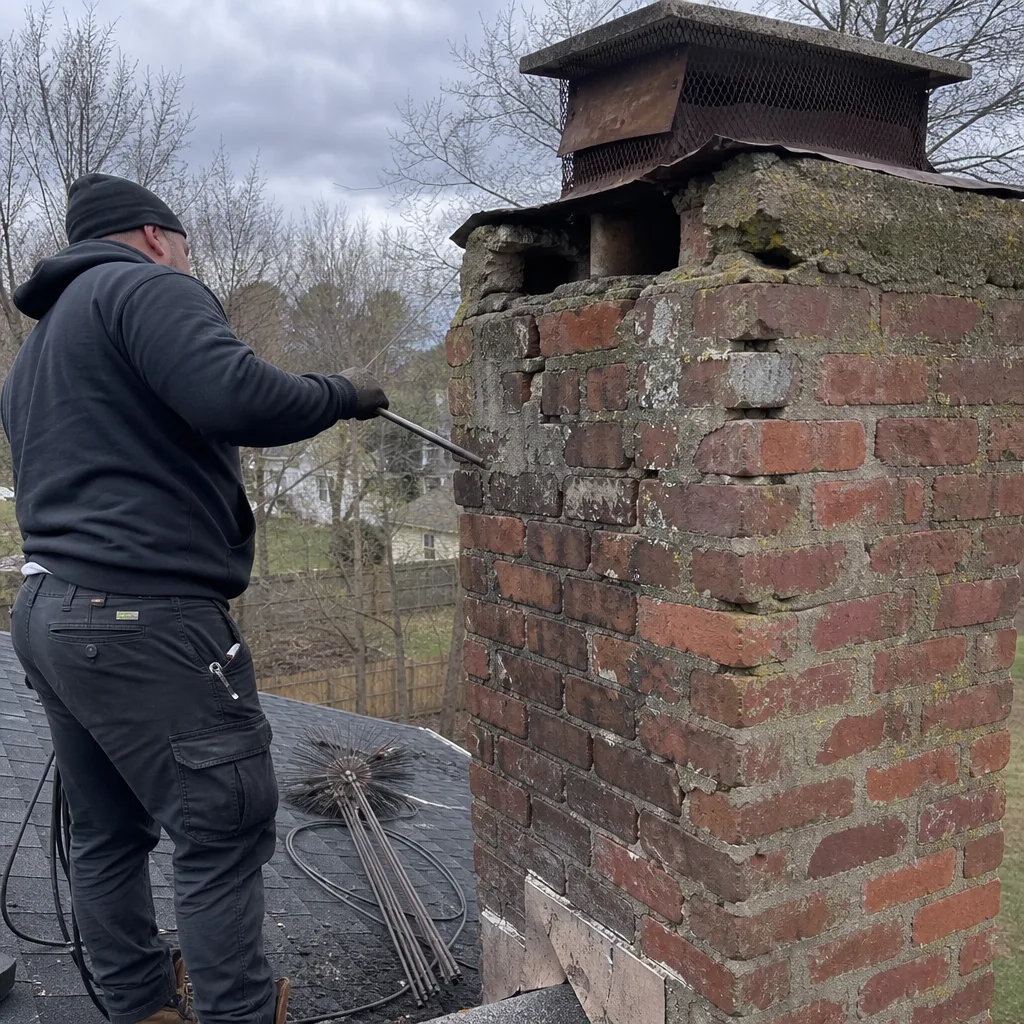 Before
 After
After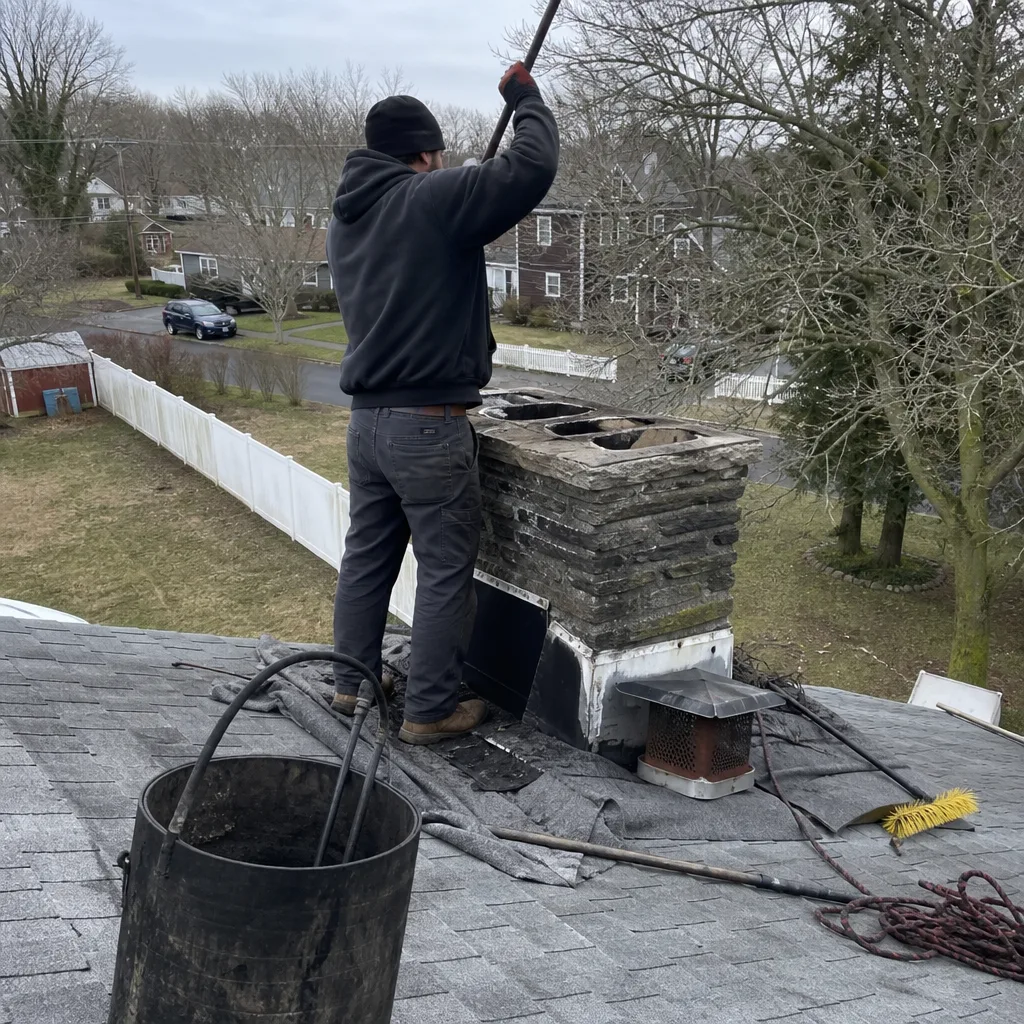 Before
 After
AfterCreosote Removal in Smithtown, NY
Creosote removal is the process of stripping hardened, flammable deposits from the interior walls of your chimney flue – deposits that build up every time you burn wood and that, left alone, become the leading cause of chimney fires. In Smithtown, where homes in neighborhoods like Nesconset, Commack, and St. James were built during the post-war boom and have been burning wood for decades, we find heavy creosote accumulation more often than not. If your fireplace smells like tar on warm days, if your damper is sticky with dark residue, or if it has been more than a year since anyone has looked up your flue, schedule Chimney Cleaning & Sweep services or call (631) 814-2057 – a live person answers every hour of every day – and we will tell you plainly what you are dealing with.
Hearthstone Chimney Co. has been removing creosote from Smithtown chimneys since 1984. That is over 42 years of seeing what happens when this job gets skipped, and what it takes to do it correctly. Our Chimney Cleaning & Sweep in Smithtown service covers every stage from routine annual sweeps to full third-degree creosote remediation, and creosote removal sits at the center of that work. Russell Haines built this company around one standard: the job gets done right, or we come back. That promise is in writing, no arguing.
What Creosote Actually Is – and Why It Matters in Smithtown
Creosote forms when wood smoke cools before it fully exits the flue. The unburned particles condense on the liner wall and harden over time. Every fire adds another thin layer. The chemistry is straightforward, but the danger is real: creosote ignites at around 1,100 degrees Fahrenheit, and a chimney fire can reach 2,000 degrees or more inside a flue that was designed to handle a fraction of that heat. The National Fire Protection Association reports that creosote buildup is the number one cause of residential chimney fires in the United States.
Smithtown’s winters make this worse than the national average suggests. Long Island heating seasons typically run from October through April – sometimes longer – and many of the older colonials and ranch homes here were built with relatively short, interior chimneys that stay cooler than ideal. Cool flue walls mean faster condensation. Add a decade or two of burning green or mixed wood, as many longtime homeowners have done, and the accumulation can be substantial.
Professionals classify creosote in three degrees:
- First-degree creosote is a light, flaky soot that a standard chimney brush removes in a single sweep. Most chimneys cleaned annually stay at this stage.
- Second-degree creosote is a harder, tar-like coating that has baked onto the liner surface. It requires rotary-style power tools and chemical treatments to break down. We see a lot of this in Smithtown homes that missed a few seasons of sweeping.
- Third-degree creosote is a thick, glaze-like layer – sometimes called “glazed creosote” – that bonds directly to the liner and is extremely difficult to remove without specialized equipment or chemical application. It is also the most combustible form. A third-degree buildup is a serious fire hazard and should be addressed before the fireplace is used again.
Knowing which degree you have changes everything about how the job is approached. That is why we start with a Level 1 Inspection before we quote, and why we bring a Level-2 camera into the flue before we ever pick up a brush.
When You Need Creosote Removal
Most homeowners do not know they have a creosote problem until a Fireplace Cleaning sweep tells them. Here are the situations where creosote removal – beyond a standard annual sweep – is warranted:
- A tar or burned-wood smell indoors, especially on warm or humid days. In Smithtown’s humid summers, creosote deposits off-gas through the damper and into the living space. That persistent, acrid smell when you open the fireplace is a reliable sign of second- or third-degree buildup.
- Visible dark streaking on the firebox walls or damper plate. If you can see dark, oily residue running down into your firebox, what is further up the flue is almost certainly worse.
- You have not had a professional sweep in two or more years. If your fireplace has been in regular use and has not been swept since before the pandemic, a routine cleaning almost certainly will not be enough. We see this regularly in Hauppauge and Kings Park homes where the fireplace gets heavy use every winter.
- You heard or saw signs of a chimney fire. A loud crack or rumble during a fire, flames or sparks coming from the top of the chimney, or a strong smell that is different from normal smoke – these are signs a chimney fire may have occurred. After any suspected chimney fire, stop using the fireplace immediately. A Level-2 inspection and thorough creosote removal are required before it is safe to light another fire.
- You switched to burning more wood after years of gas or oil heat. Many Smithtown homeowners returned to their wood-burning fireplaces during recent winters. If the fireplace sat largely unused for years and then went back into heavy rotation, the flue should be inspected and any accumulated deposits removed – dormant creosote does not disappear on its own.
- A previous inspection noted creosote at more than one-eighth of an inch. The Chimney Safety Institute of America (CSIA) and NFPA 211 both use that threshold as the point at which cleaning is mandatory, not optional. If any written inspection report in your records mentioned that measurement or used terms like “significant buildup” or “restricted flue,” the time for removal has already passed.
Our Creosote Removal Process
We do not show up, sweep for twenty minutes, and call it done. Creosote removal is methodical work, and the steps below are what every job includes from start to finish.
- Pre-work inspection with Level-2 camera documentation. Before we touch anything, we send a camera up the flue. This tells us exactly what degree of creosote we are dealing with, whether there is liner damage or blockage, and where the heaviest accumulation is located. You see the photos. We give you a plain-English verdict before work begins – not after. No surprises on the bill means no surprises before it either.
- Firebox and hearth protection. We seal and cover your firebox, hearth, and surrounding room area with drop cloths and containment equipment before any brushing or chemical application begins. Forty-two years of doing this work in people’s homes has taught us that the mess is our problem to manage, not yours to clean up.
- Rotary power sweeping for second-degree deposits. For buildup that has hardened beyond what a hand brush will remove, we use rotary mechanical sweeping systems matched to your flue size. This breaks the deposits free from the liner walls without damaging the liner itself.
- Chemical creosote treatment where needed. Third-degree or glazed creosote requires a chemical application – a dry powder or liquid product applied to the deposits to convert the glaze to a more friable form that can then be brushed clear. We use professional-grade products suited to the liner type and the specific creosote classification. When the work calls for professional-grade chimney supply materials, we source from trusted names like Copperfield and Olympia Chimney – not builder-grade substitutes.
- Full debris removal and cleanup. Every particle that came off the liner wall gets vacuumed out. We use HEPA-filter rated vacuums to capture fine soot and particles. When we leave, your home is clean.
- Post-removal camera verification and written documentation. Once the flue is clear, the camera goes back up. We document the condition of the liner after cleaning, note any repairs the liner may need, and give you a copy of the post-job report. If the work uncovered a crack, a gap in the liner, or any structural concern, you will know about it in plain language – along with what fixing it actually involves and what it costs.
Most creosote removal jobs in Smithtown are completed in a single visit. If the buildup is severe enough to require a two-stage chemical treatment – where the first application needs time to work before a second sweep – we will tell you that before we start.
Creosote Removal Pricing in Smithtown
Creosote removal in Smithtown typically runs between $250 and $800 for most residential chimneys, depending on the degree of buildup and the type of liner. A straightforward second-degree cleaning on a standard clay-tile flue falls toward the lower end of that range. Third-degree glazed creosote requiring chemical treatment and multiple sweeps can reach the higher end or beyond, particularly in taller chimneys serving two-story homes – which are common in the older sections of Smithtown and Commack.
| Creosote Degree | Typical Approach | Estimated Price Range |
|---|---|---|
| First-degree (light/flaky) | Standard brush sweep | Covered under routine annual sweep |
| Second-degree (tar-like) | Rotary power sweeping | $250 – $450 |
| Third-degree (glazed) | Chemical treatment + rotary sweep | $450 – $800+ |
| Post-fire remediation | Full inspection + removal + liner assessment | Quoted after Level-2 inspection |
What affects the final number: flue height, liner material (clay tile versus stainless steel flex liner), degree of buildup, and whether any liner repair is needed after the cleaning. We give you a firm price before we start. The number on the estimate is the number on the invoice.
If you have a written estimate from another company, we offer a Free Second Opinion at no charge. And if your job totals over $250, ask about $50 Off Any Repair Over $250 – one of four standing offers we keep on the books year-round. Seniors and veterans receive a permanent 5% discount on all services.
Call (631) 814-2057 for a free estimate – the call takes less than five minutes and a live person will answer.
FAQs – Creosote Removal in Smithtown
How do I know if I have dangerous creosote buildup?
The most reliable way to know is a professional inspection with a camera – but a strong tar smell indoors on warm days, visible dark or oily residue in the firebox, or a fireplace that has not been swept in two or more years of regular use are all clear indicators that you likely have second- or third-degree accumulation. A visual check from below with a flashlight can show you the bottom of the flue, but it cannot show you what is happening six feet up. If you are unsure, call (631) 814-2057 – we will tell you plainly what we see.
Is creosote removal something a homeowner can do themselves?
First-degree creosote – the light, flaky soot – can be swept by a careful homeowner with the right brush kit. But second- and third-degree buildup requires rotary power equipment and, in the case of glazed creosote, chemical treatments that should only be handled by a trained sweep. More to the point, the real danger with DIY creosote removal is not knowing what you are looking at: a homeowner who sweeps away surface soot but misses a half-inch of glazed buildup behind it has not made the chimney safer. We see this situation regularly in Smithtown. If there is any question about the degree of buildup, have a professional confirm it before you burn another fire.
How often does creosote removal need to be done?
Annual sweeping prevents creosote from progressing past first-degree in most cases. If you burn frequently – more than three or four fires per week through a full heating season – or if you regularly burn green, wet, or mixed wood, every season is the right interval. Smithtown’s heating season runs roughly six months, and heavy users often accumulate enough buildup to warrant a mid-season inspection as well. The simple answer: once a year at minimum, and any time you notice the warning signs listed above.
Can creosote removal damage my chimney liner?
Done correctly, no. Rotary brushes are sized to match the flue dimensions so they scour the deposit without scoring the liner. Chemical treatments are formulated to break down organic creosote without attacking clay tile or stainless steel. The risk comes from using the wrong tools for the liner type or from applying chemicals incorrectly – both of which are reasons to hire a sweep who knows the difference. When our post-removal camera inspection shows liner damage, it was almost always there before we arrived, not caused by the cleaning. That is exactly why we document with photos before and after: you can see the liner’s condition at both points, and there is no ambiguity about what we did or found.
Why Smithtown Homeowners Call Hearthstone First
Hearthstone Chimney Co. has been at this long enough – since 1984 – to know that a homeowner who has lived in the same house for twenty years and is calling about their fireplace is not looking for a sales pitch. They are looking for a straight answer and a job they will not have to revisit.
Russell Haines built this company on that premise. Every technician who comes to your Smithtown home is background-checked, uniformed, and trained to document what they find and explain it clearly. The 90-Day Done Right Promise covers every job in writing: if it is not right, we come back. No paperwork. No arguing. That is not a marketing phrase – it is the way the company has operated for over four decades, and it is why we expect to be doing this work in Smithtown for the next four decades as well.
If you have questions about our home page or want to learn more about the full range of chimney services we offer, you will find everything there. For creosote removal specifically, the fastest path to an answer is a phone call.
Schedule Your Creosote Removal in Smithtown
If your fireplace has not been inspected this season, or if you already know there is a buildup problem and you want it handled correctly, call (631) 814-2057. A live person answers every hour of every day. We will schedule a time that works for you, bring the camera, give you a firm price before we start, and back the work with the 90-Day Done Right Promise in writing. Free estimates. No surprises on the bill. Done right.
Written by Russell Haines, Owner at Hearthstone Chimney Co., serving Smithtown since 1984.